
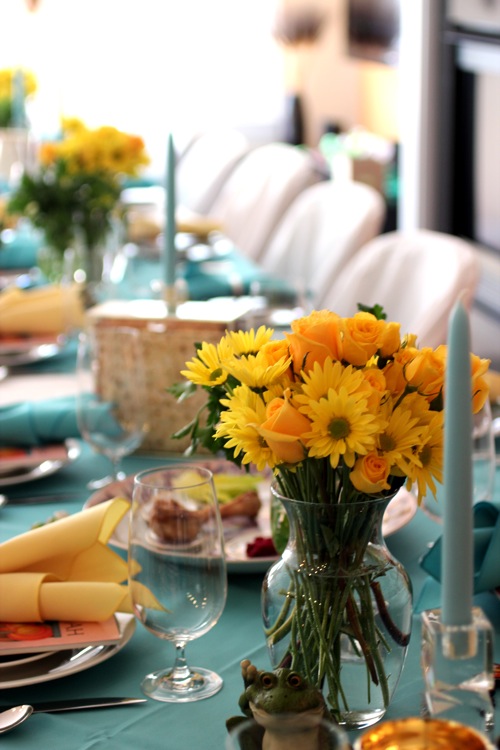
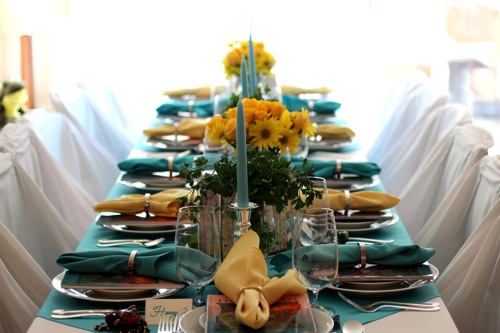
Passover Seder Table 2012 and Our Beloved Frog Collection
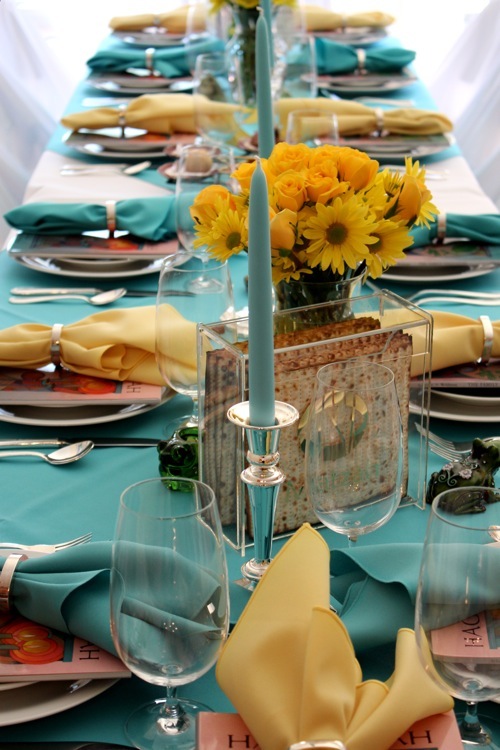
My dear sister-in-law Kristy and I gleefully agonize over the color scheme for the Passover Table every year. When our guests arrive just before sundown, they are always surprised and delighted by Kristy’s table.
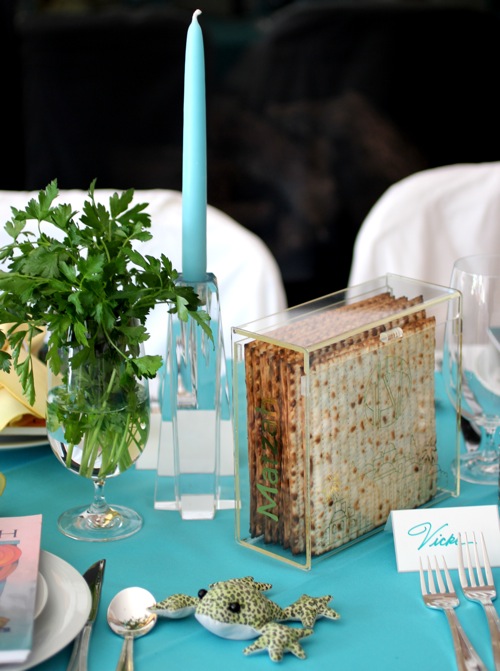
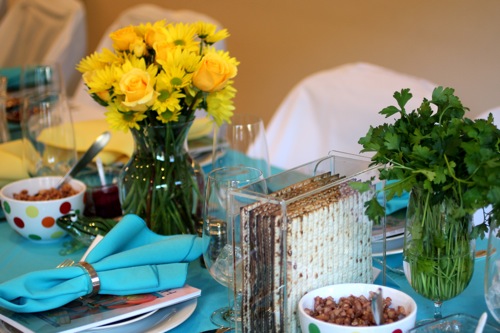
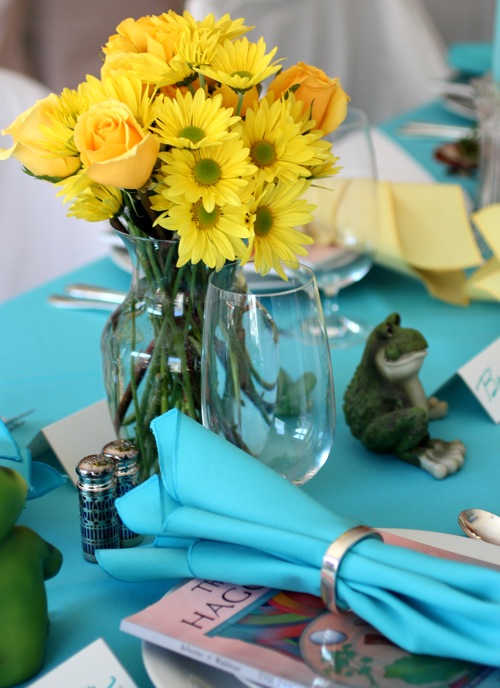
And of course, by then, I’ve photographed the table from every angle for Taste With The Eyes. In addition to the striking turquoise & yellow color scheme of 2012, some of the color combinations from our past Seders include:
- Gold & Raspberry
- Gold & White
- Eggplant & Sky Blue
- Lavender & White
- Tangerine & Hot Pink
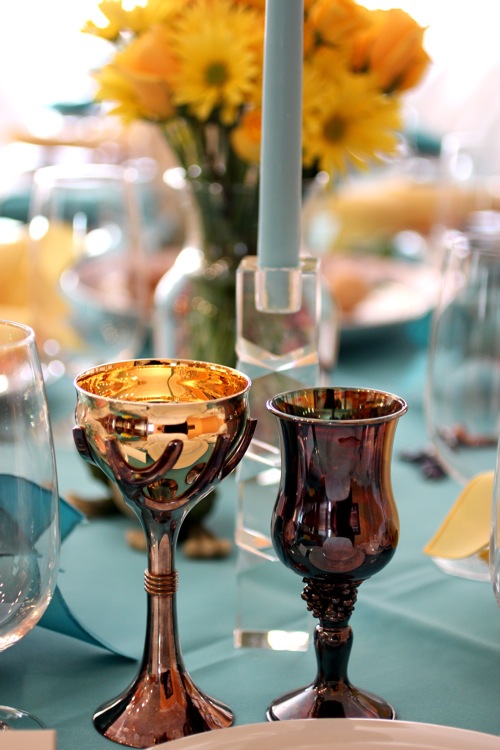
The Passover Seder Table is not simply a place to tell the story of the Exodus and to eat dinner. The Table is symbolic in and of itself. It is a place where memories are made and traditions are taught. It is where we gather with family and friends, and perhaps strangers too, to celebrate our freedoms.
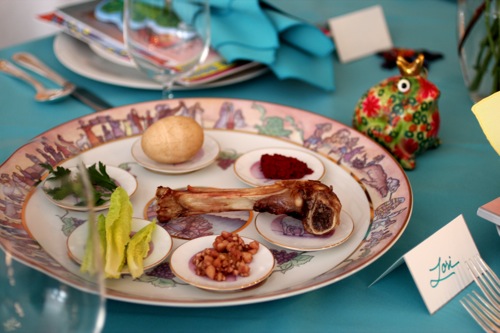
The vibrancy and beauty of the Table reflect our gratitude to God for taking us from slavery to freedom, from sadness to happiness, from pain to joy, from darkness to light. Fresh flower arrangements that mirror the color scheme make the table especially spring-like and festive as we celebrate the bounty, joy, and beauty of the season.
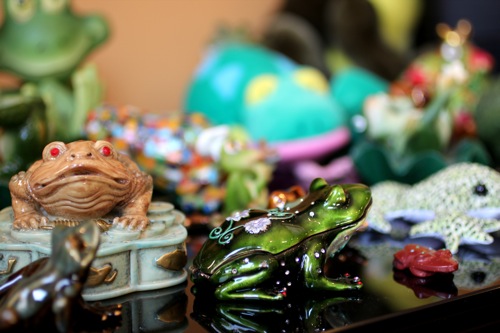
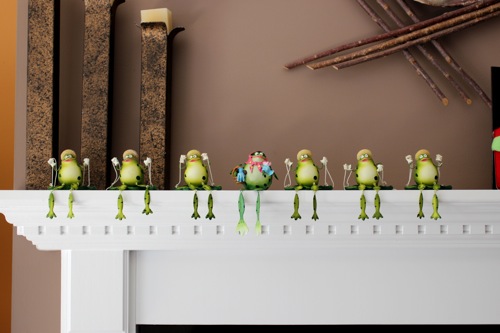
Newcomers to the Seder ask, “What can I bring?” We say BRING A FROG…and we have built up quite a collection over the past decade!
Why a Frog?
God told Moses, “Behold, I hear the cry of the children of Israel. I have surely remembered you and seen what is done to you. And now I will put forth my hand and smite Egypt with signs and with wonders. Go tell Pharaoh, Let My people go!”
Moses told Pharaoh, “Let My people go!” But Pharaoh said no. So God sent ten awful plagues to punish the Egyptians and to teach Pharaoh that only God is God.
First God turns all the water in all the rivers, streams, ponds and pools in Egypt to blood. For seven days blood flows everywhere; there isn’t a single drop of water for the Egyptians to drink. And God says, “Let My people go!”
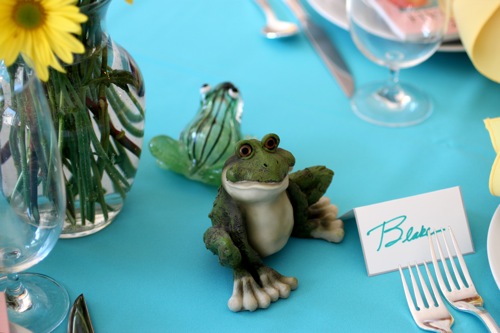
But Pharaoh still refuses. Now God sends frogs swarming all over Egypt. Frogs hop into the Egyptians’ houses, into their bedrooms and into their beds.
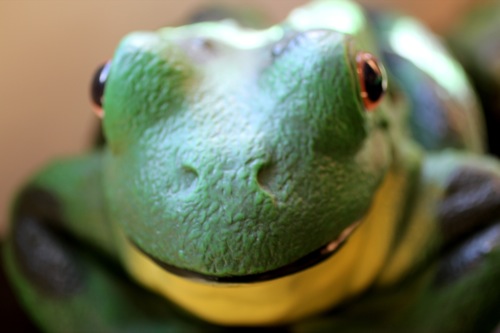
Frogs hop into the kitchens where bread is made, and even into the ovens.
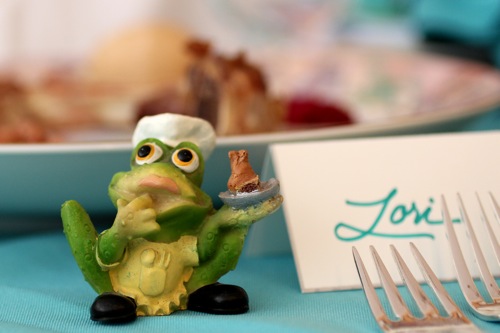
And God says, “Let My people go!”
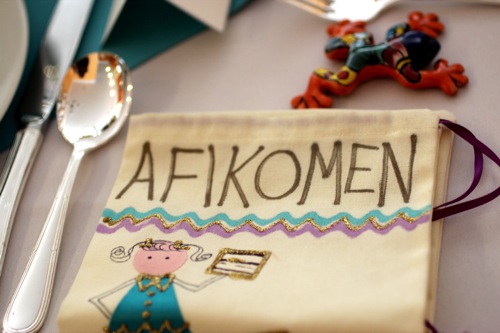
Pharaoh promises to set us free but as soon as God makes all the frogs hop away, Pharaoh breaks his promise.
So God sends seven more plagues: gnats, flies, cattle disease, boils, hail, locusts, darkness.
“Let My people go!” When Pharaoh still refuses, God sends the tenth and final plague – the slaying of the firstborn. But first God tells us to use the blood of a lamb to mark our doors. The Angel of Death will see the mark on our doors and PASS OVER our houses when it is time to inflict the plague.
“Let My people go!” Finally, finally Pharaoh frees us. God saved us from slavery with signs and wonders.
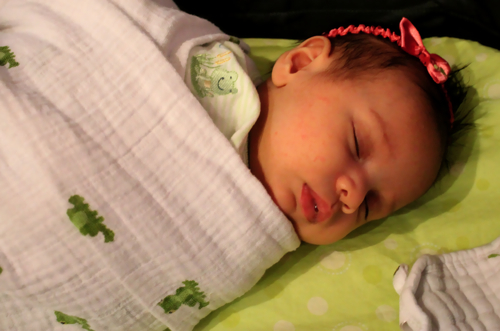
Little cousin Ava (6-weeks) wearing frogs to her first Seder.
We are all children of God. We remember the Egyptians who suffered such terrible plagues. We cannot satisfy our thirst or celebrate our freedom without remembering the sorrow of other people. We are no longer slaves, but what does our freedom mean? Our tradition teaches that all of us must work together to end slavery, find freedom, and create a better world.
(Portions of this post were written with the help of The Family Haggadah by Ellen Schecter).
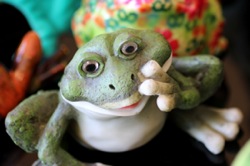
Psst. Do you have suggestions for next year’s color scheme?
Please share!
Discover more from Taste With The Eyes
Subscribe to get the latest posts sent to your email.
26 thoughts on “Passover Seder Table 2012 and Our Beloved Frog Collection”