
Haroset
חֲרֽוֹסֶת
Welcome to our Seder! In the next few posts I plan to share customs of the Passover Seder. The Hebrew word seder means order. The Seder tells the story of how we were slaves in Egypt before God led us to freedom. Each year at Passover we go on a journey in our hearts from slavery to freedom, from sadness to joy.
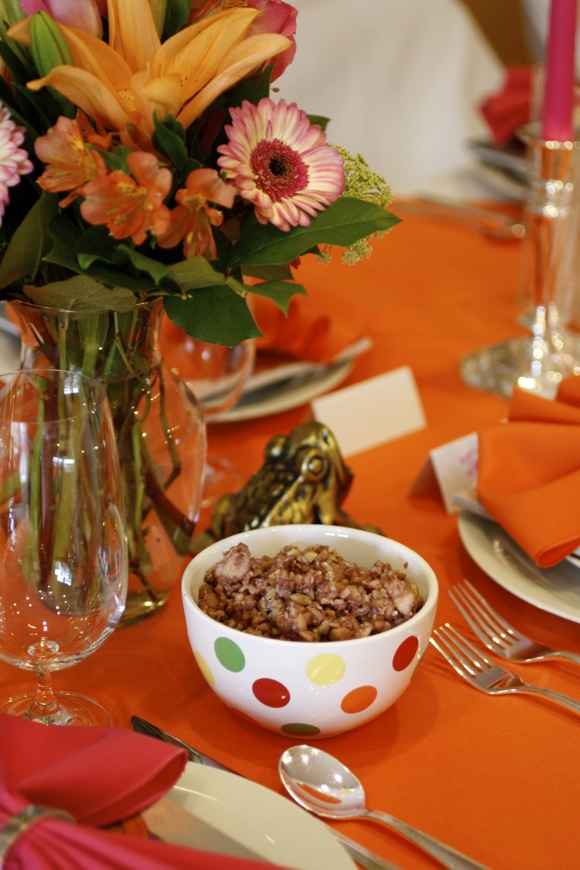
Haroset is a mixture of chopped apples, walnuts, wine, cinnamon, and a touch of honey. Its texture and color remind us of the bricks and mortar Jewish slaves had to make when we built cities for Pharaoh. And the sweetness of haroset reminds us of the sweet taste of freedom…
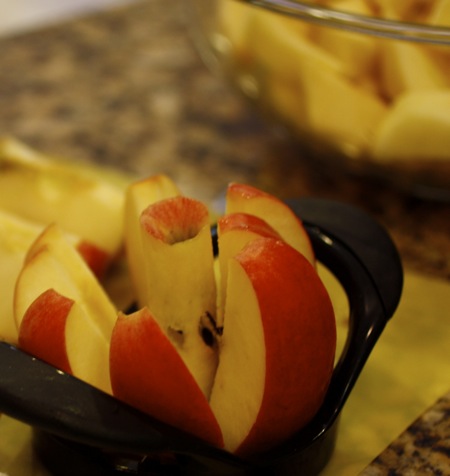
Core and peel 10 apples.
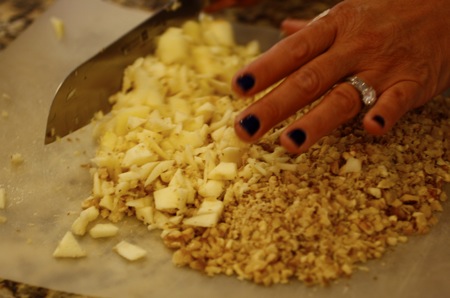
Chop 2 c. walnuts, chop apples. Mix well.
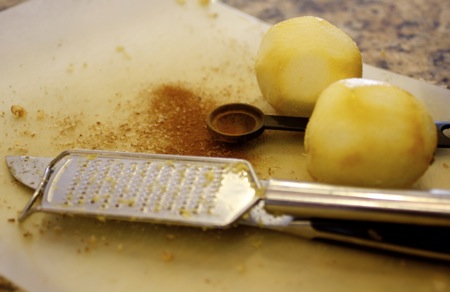
Add the zest from 2 lemons and 2 t. cinnamon powder.
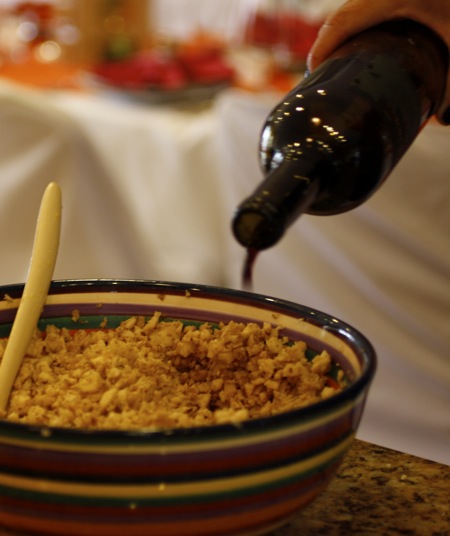
Add (good) Kosher red wine to bind the mixture, about 2 c. Add honey to taste.
Refrigerate until ready to use.
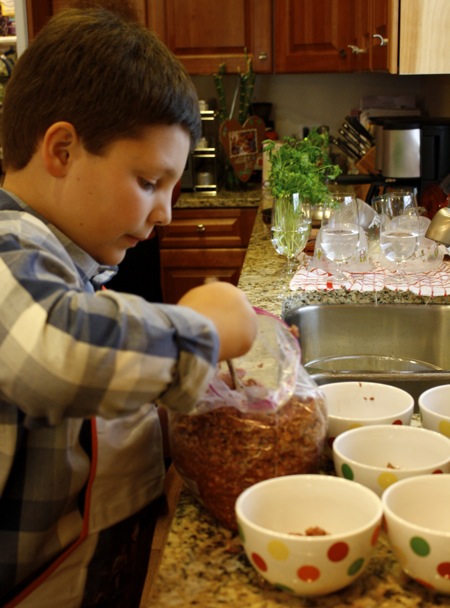
Stone places haroset in bowls, as we get ready for the seder.
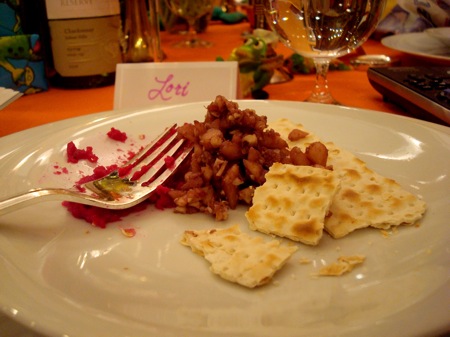
Hillel Sandwich
Maror means bitter herbs, such as horseradish. It reminds us of the bitterness and pain of slavery.
Matzah is the symbolic bread of our Exodus from Egypt. It is made without leaven or yeast so it cannot rise. Our ancestors had to escape Egypt so quickly, there was not time to wait for bread to rise, so bread was removed from the ovens while still flat.
Millenniums ago, Rabbi Hillel taught us to eat maror and haroset between two pieces of matzah to simultaneously taste the bread of affliction, the bitterness of slavery, and the sweetness of freedom.
We enjoy every delicious bite of our Passover meal, not only because we share it with our dear family and cherished friends, and not entirely due to the fabulous recipes and fine cooking…we enjoy this meal mostly because we remember the suffering of our ancestors and are grateful to finally be free.
Discover more from Taste With The Eyes
Subscribe to get the latest posts sent to your email.
19 thoughts on “Haroset, Ashkenazi-Style חֲרֽוֹסֶת”