

Matzah and Haroset
🫓 🫓 🫓 🍎 🍎 🍎
Each year at Passover, we journey in our hearts from slavery to freedom, from sorrow to joy. Through foods steeped in meaning, we are compelled to experience that journey, just as our ancestors did over 3,000 years ago. Among the symbolic foods on our table are matzah and haroset.
This year, we served special handmade shmura matzos baked in Israel, certified to the highest kosher standards. (Thank you, Rich!) Shmura matzah—“watched” matzah—is carefully supervised from wheat harvest to baking to ensure it stays completely unleavened, making it the most authentic choice for Passover.
It is known as “the bread of affliction that our ancestors ate in the land of Egypt,” reminding us of a life shaped by hardship—plain, quickly made, and born of necessity. Yet that same flatbread takes on new meaning at the moment of liberation. As we prepared to leave Egypt, there was no time for dough to rise. What we baked in haste became the bread we carried into freedom, marking the urgency and immediacy of our departure. These two meanings—affliction and haste—are intertwined. Matzah is both the bread of our suffering and the bread of our redemption.
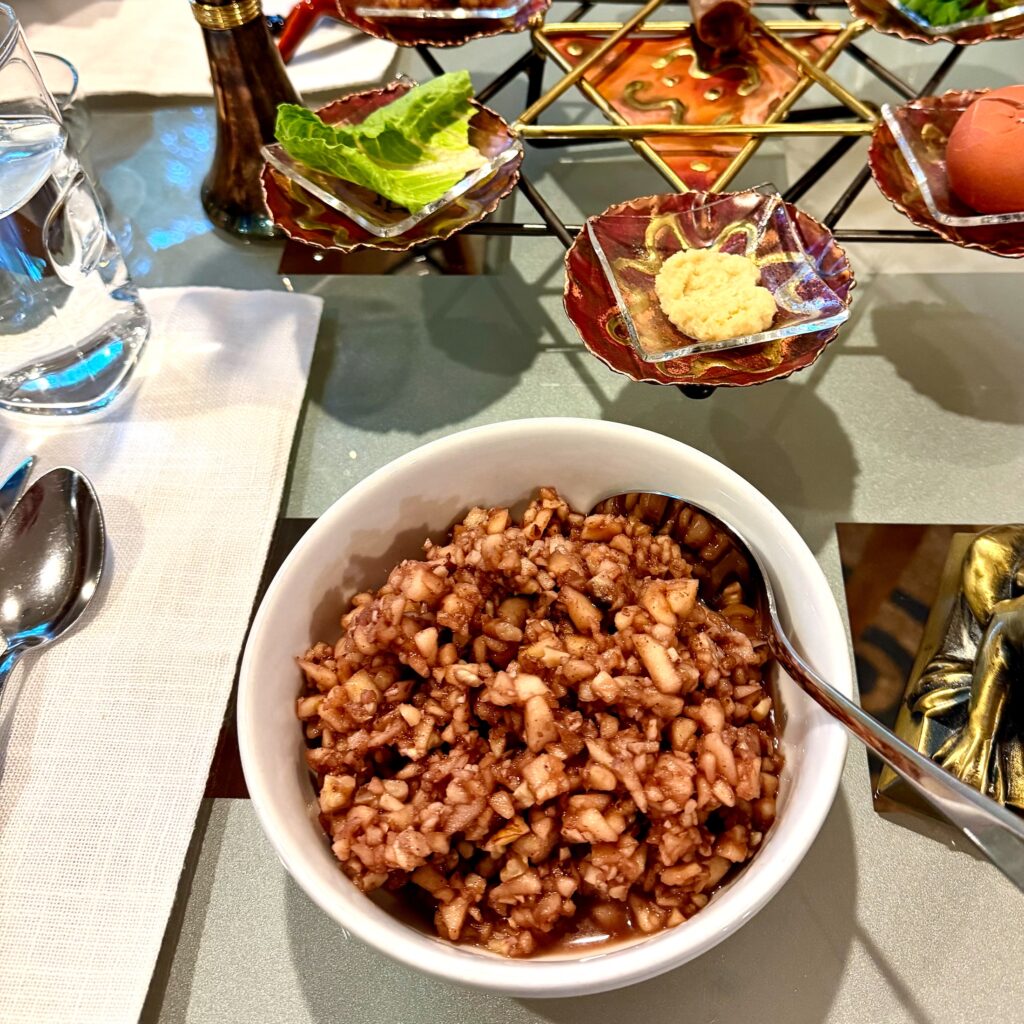
Haroset, another essential food on our Seder table, is a sweet, spiced fruit and nut mixture that carries its own story. Its coarse texture and reddish-brown color evoke the bricks and mortar we labored over as slaves, shaping and stacking them to build Pharaoh’s cities. Its sweetness reflects the joy we felt the moment Pharaoh finally freed us from slavery, following God’s sending of the tenth plague.
Here, I’m sharing my sister-in-law’s recipe, a cherished family favorite that brings both delicious flavor and tradition to the table. (Thank you, Kristy!)