Halibut Francese

Halibut Francese

Halibut Francese

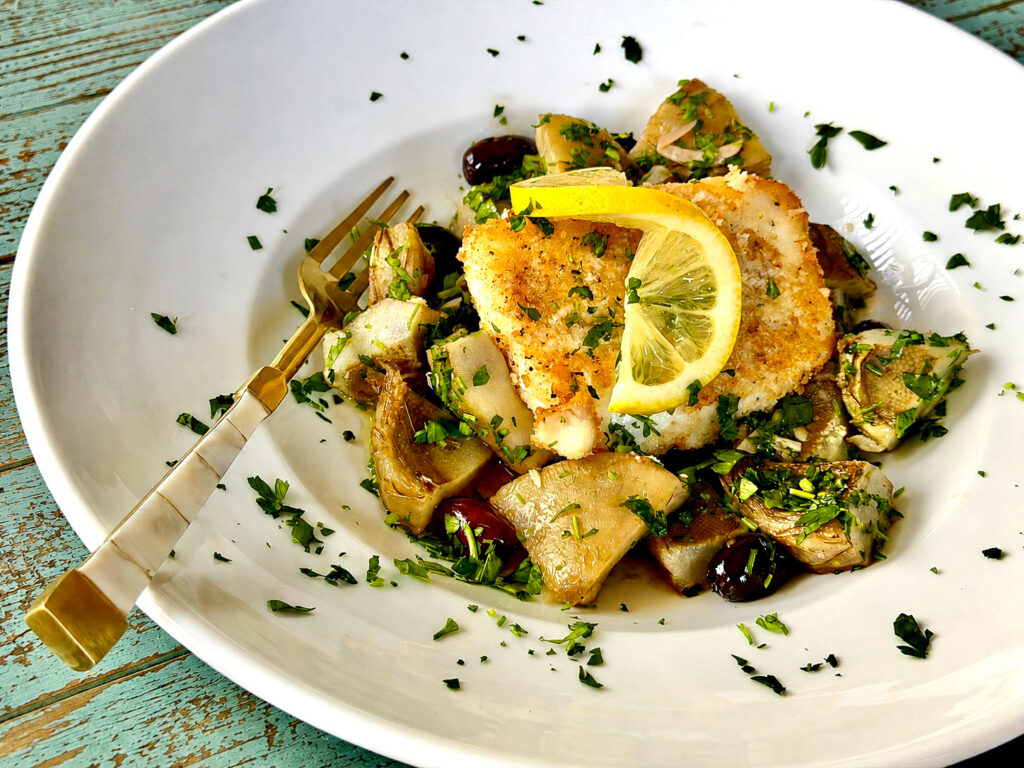
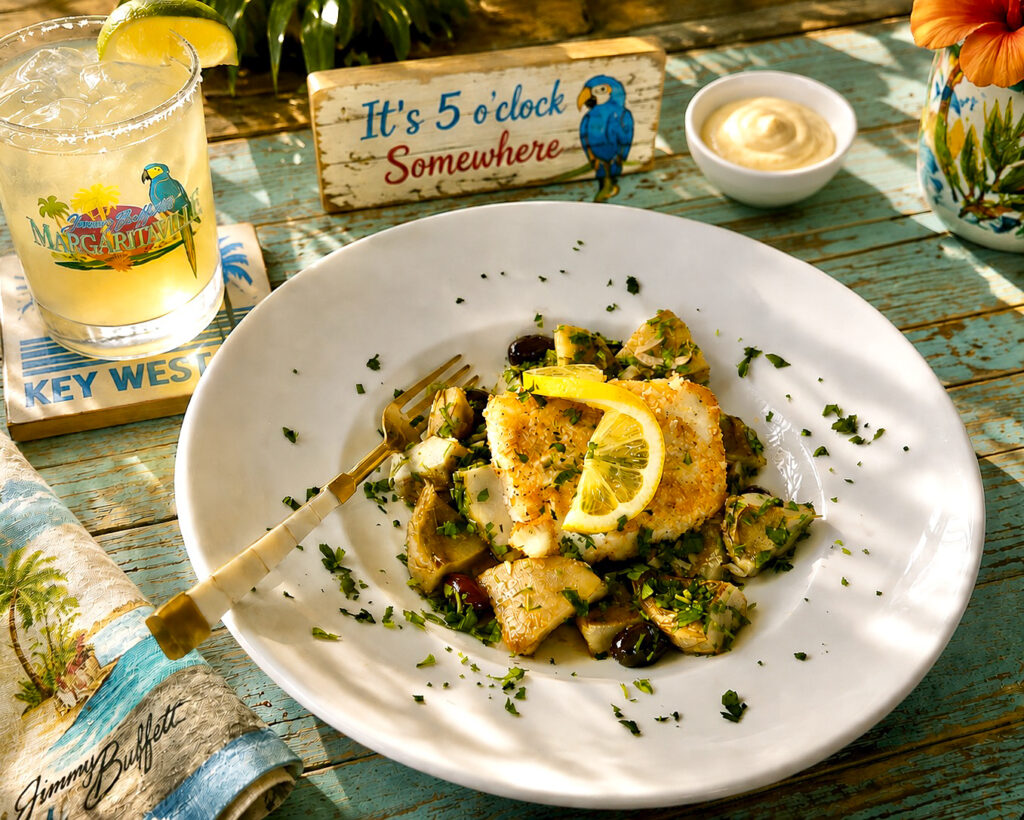
Halibut Francese is a beautiful twist on the Italian-American classic chicken francese — light, lemony, and elegant. It pairs the tender flakiness of halibut with a silky lemon-sherry-butter sauce that’s both savory and bright.

Francese means “in the French style” in Italian. Chicken Francese has its roots in Italian-American cooking, though its name suggests something more continental. Despite the “French” in the title, the dish was created by Italian immigrants in New York—thin chicken cutlets dipped in flour and egg, sautéed until golden, and finished in a lemon-butter sauce. In many restaurants, it’s still served over strands of spaghetti or angel hair to catch every drop of that sauce.

Halibut Francese

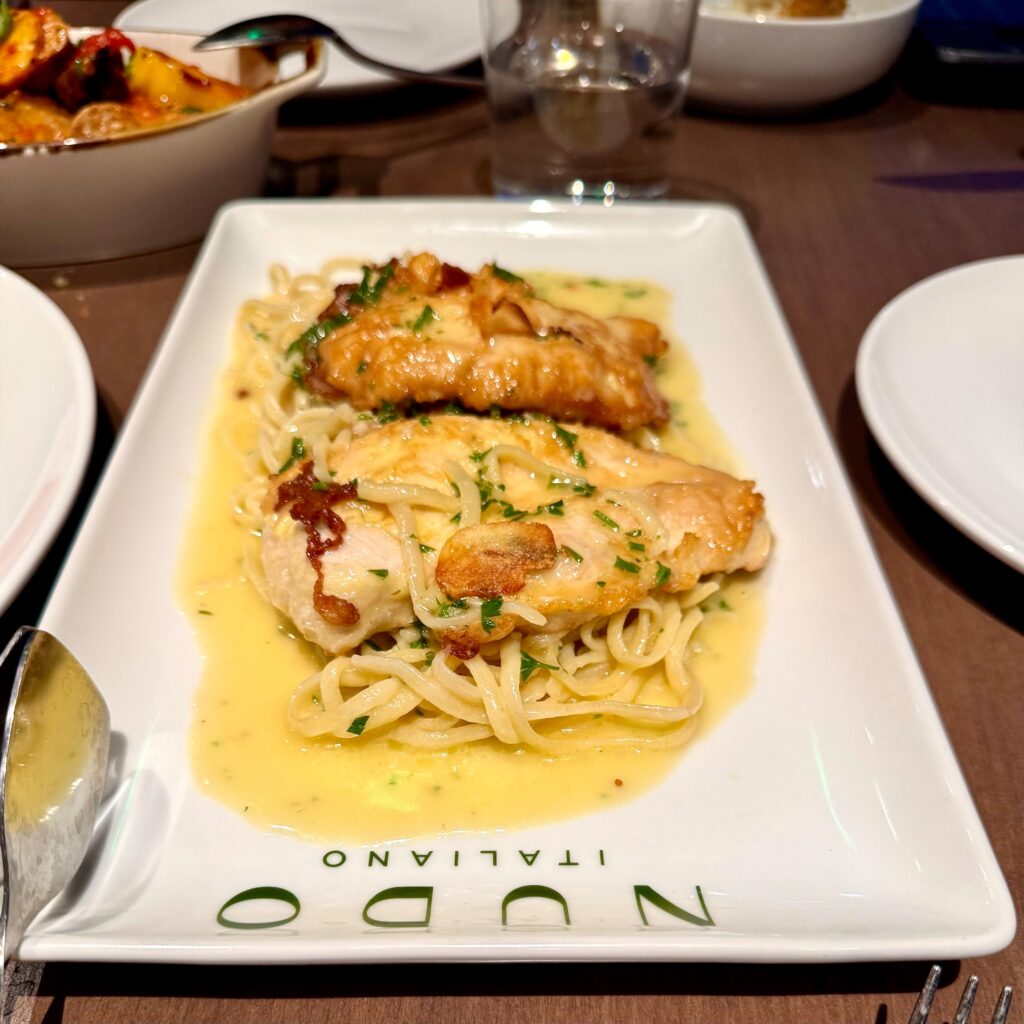
A recent meal at the fabulous new Italian restaurant, Nudo Italiano, in southwest Las Vegas, brought back memories of the classic Chicken Francese we loved in Chicago’s Italian-American restaurants decades ago. That flavor profile inspired my modern interpretation: wild Alaska halibut cooked Francese-style with an eggy twist, served with a lemon-sherry-butter sauce and complemented by caramelized baby bok choy and peppery watercress.

Nudo Italiano
Chicken Francese at Nudo Italiano

My Halibut Francese builds on that classic approach with a few refinements. A fillet of halibut is sautéed in the traditional Francese method but with the extra egg poured over as it cooks, creating a delicate, golden coating. The fish is plated over a pool of lemon-sherry sauce to keep the crust crisp, while braised baby bok choy adds gentle sweetness and contrast. A few sprigs of fresh watercress bring a clean, peppery lift. The result is a bright, elegant plate that feels both familiar and new — comfort elevated with subtle sophistication.

Halibut Francese
With Braised Baby Bok Choy Recipe

Continue reading “Halibut Francese”

Pan-Seared Halibut Cheeks, Lemony Quinoa with Garbanzos

Pan-Seared Halibut Cheeks, Lemony Quinoa with GarbanzosPan-Seared Halibut Cheeks
Lemony Quinoa with Garbanzos

When it comes to a special ingredient like halibut cheeks, it’s best to keep the recipe simple and let the product shine.

Halibut cheeks are a prized cut of the fish, often considered the most tender and flavorful part. They come from the small, rounded muscle beneath each eye of the halibut—an area the fish uses to move its jaw. Because halibut are large, flat-bodied fish, their cheeks are more substantial than most, yielding thick, scallop-like medallions that are especially sought after by chefs and seafood lovers.

The texture of halibut cheeks is one of their most appealing qualities. They’re firm yet tender, with a natural flake that’s finer and more delicate than the fillet. They have a slightly sweet, mild flavor—clean and refined, but with more succulence than the rest of the fish. Some compare them to scallops for their texture and sweetness, but halibut cheeks have a character all their own.

Cooking halibut cheeks is simple, and best when techniques highlight their delicacy. A quick pan-sear in butter and olive oil with a splash of lemon is all they need. Halibut cheeks are a treat that rewards minimalism and careful preparation.

Pan-Seared Halibut Cheeks Recipe

Continue reading “Pan-Seared Halibut Cheeks, Lemony Quinoa with Garbanzos”

Halibut, Farro, Creamy Colorful Vegetable Salad

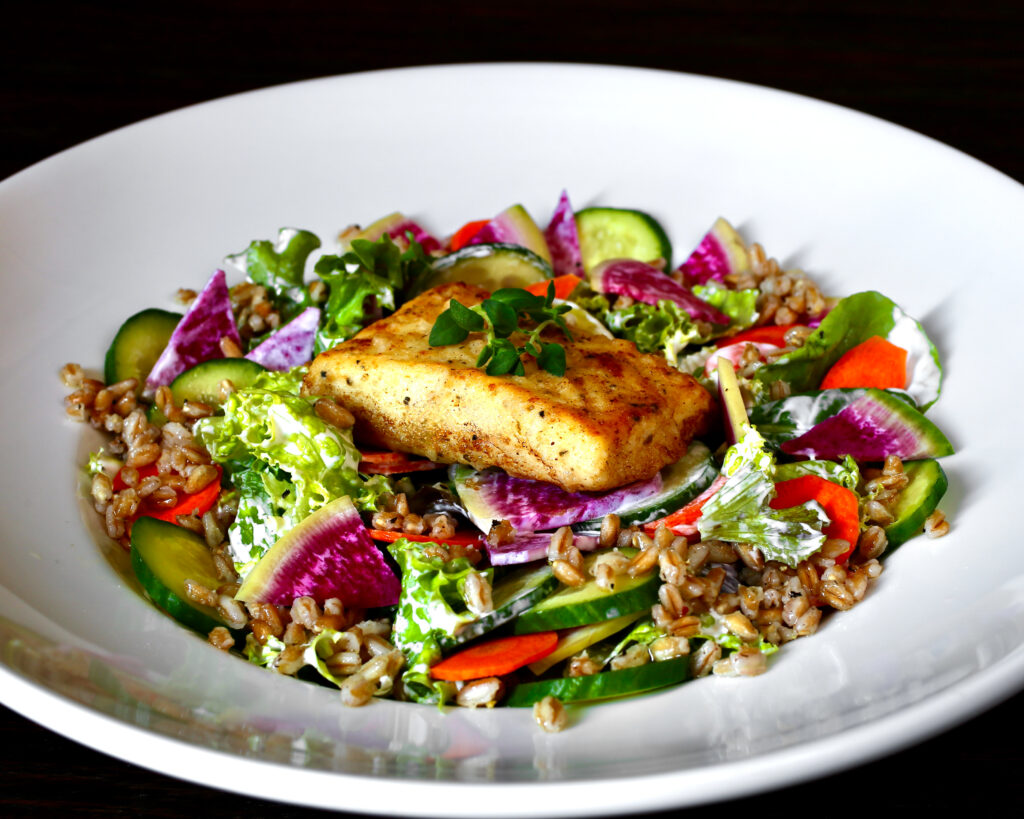
Halibut over Creamy Farro Vegetable SaladPan-Seared Kodiak Alaska Halibut
Farro, Watermelon Radish, Carrot, Cucumber
Mexican Crema Dressing

When Captain John Skeele gets his way, he likes to fry his halibut. John thinks that frying naturally complements halibut’s texture and locks in its flavor.

So if the captain of Alaska Fishing Vessel “Sunfish” says this is the way he likes to cook halibut, I am definitely going to give it a try.

Captain John Skeele’s Halibut Technique

Continue reading “Halibut, Farro, Creamy Colorful Vegetable Salad”

Halibut Cantonese-Style

Cantonese-Style Halibut

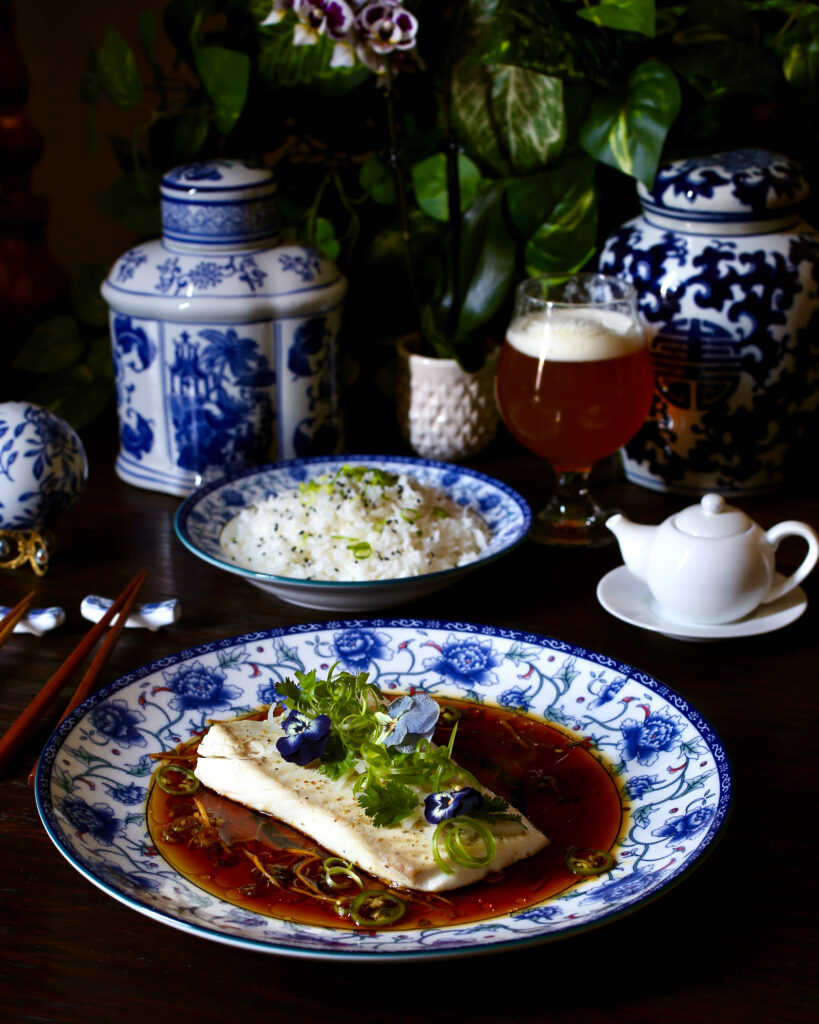
Steamed Halibut Cantonese-Style

Firm, lean, meaty, mild, and slightly sweet. Bright white flesh Halibut is often best cooked with moist methods like poaching, steaming, or braising. Inspired by Cantonese technique, here a beautiful piece of Alaskan halibut is cooked in a bamboo steamer then served in a big shallow pool of soy-ginger-garlic-sesame sauce. Each flake is drenched in the flavorful sauce before each bite. It’s quite heavenly.

Halibut Cantonese-Style Recipe

Continue reading “Halibut Cantonese-Style”

Alaskan Halibut, Japanese Flavors

Alaskan Halibut, Japanese Flavors

Panko Crusted Halibut over Baby Bok Choy in a Miso Broth
Togarashi and Mitsuba Garnish

Summer is the time to enjoy fresh halibut from Alaska. This pristine lean fish with mild, sweet white flesh, large flakes and a firm but tender texture naturally pairs well with Japanese ingredients; miso, tamari, mirin, and toasted sesame. Harmoniously balanced, this dish is a stellar warm weather meal.

Mitsuba, a Japanese herb with a fresh, wild, sweet flavor adds the herbaceous notes. Taberu Togarashi Furikake can be found in Japanese markets. A tasty mixture of black sesame, red pepper, salt, white sesame, dried bonito, kelp, powdered plum, powdered red perilla – it enlivens the whole dish. Serve with fluffy white rice on the side if desired.

Alaskan Halibut, Japanese Flavors Recipe

Continue reading “Alaskan Halibut, Japanese Flavors”