

Reverse-Sear Kurobuta Double-Bone Pork Chop
Parmesan Polenta & Pickled Cherry Pepper Sauce
Back in January 2013, I shared a recipe for Old School–Style Pork Chops with Pickled Cherry Pepper Sauce, and it has remained one of my most popular posts, with tens of thousands of views. But for 2026, I wanted to revisit it, elevate it, and give it the treatment it deserves.
I upgraded the pork to a Kurobuta double-bone chop, refined the technique with a reverse-sear for perfectly juicy edge-to-edge doneness, and captured the process in action shots, from searing to plating, to highlight color, texture, and the drama of cooking.
There are pork chops—and then there is the Kurobuta double-bone pork chop. Thick, succulent, and left intact with two bones, this chop is impossible to ignore. At 1.37 pounds, it’s more than enough for one, and honestly, it’s best shared.
Kurobuta pork, from the Berkshire breed, is prized for marbling, tenderness, and deep flavor, which makes it perfect for a reverse-sear. Slowly roasting the chop in the oven at low heat first ensures even doneness, then finishing with a hot sear gives a golden, caramelized crust. The result is juicy, tender meat with a gorgeously browned exterior.
The chop is the obvious star of the plate, served over creamy Parmesan polenta, which provides a soft, tasty contrast. To balance the richness, it is dressed with the pickled cherry pepper sauce that made the original recipe a favorite. Bright, tangy, and mildly spicy, it lifts the pork and polenta while highlighting the depth of the Kurobuta chop without overpowering it.

Reverse-Sear Pork Chop Recipe
Pork Chop
- double-bone pork chop
- coarse sea salt and fresh ground pepper
- avocado oil, to coat the bottom of the pan
- 2 T. butter
Let chop sit out at room temperature for about 30 minutes. Preheat oven to 250°F. Pat the chop dry with paper towels. Place on a wire rack over a rimmed baking sheet. Season very well with salt and fresh ground pepper. Insert a remote thermometer into the middle of the chop. Cook until the temperature reaches 115°F. Remove from oven.
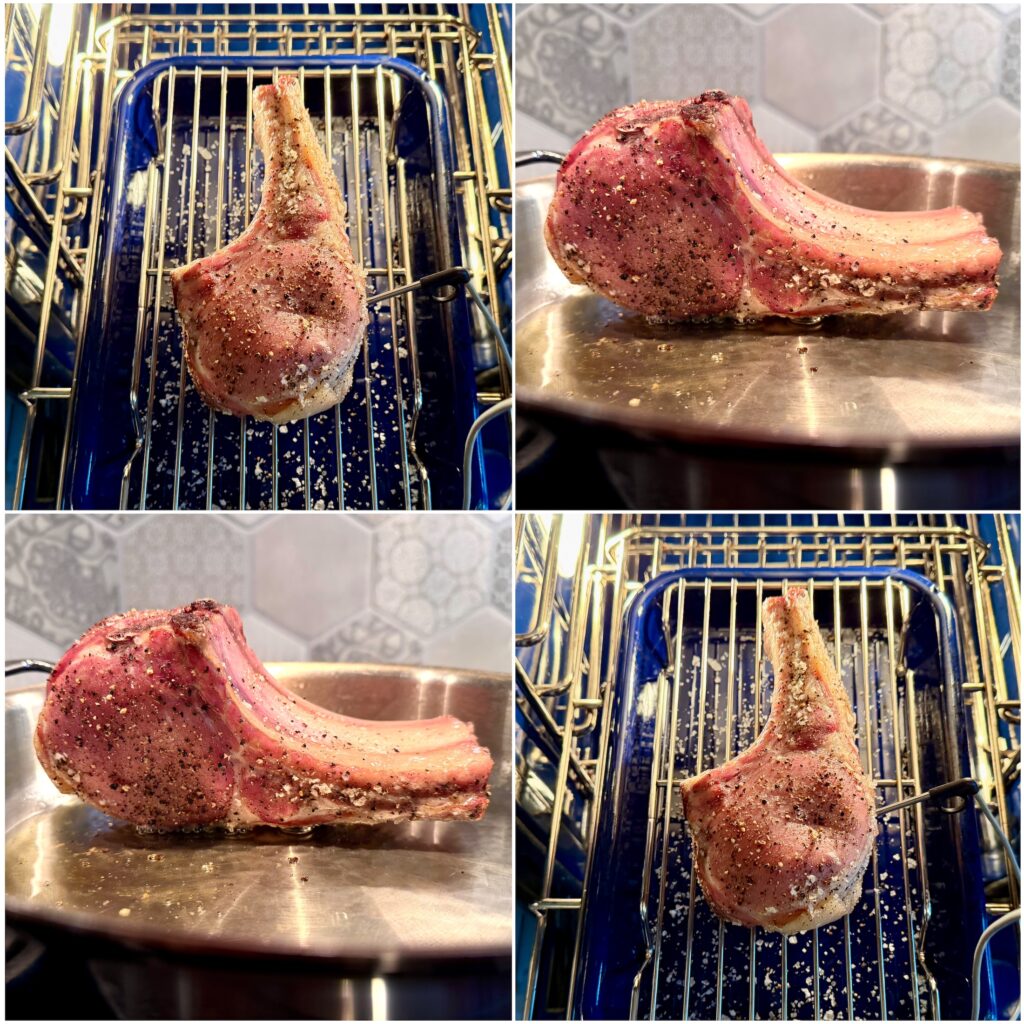
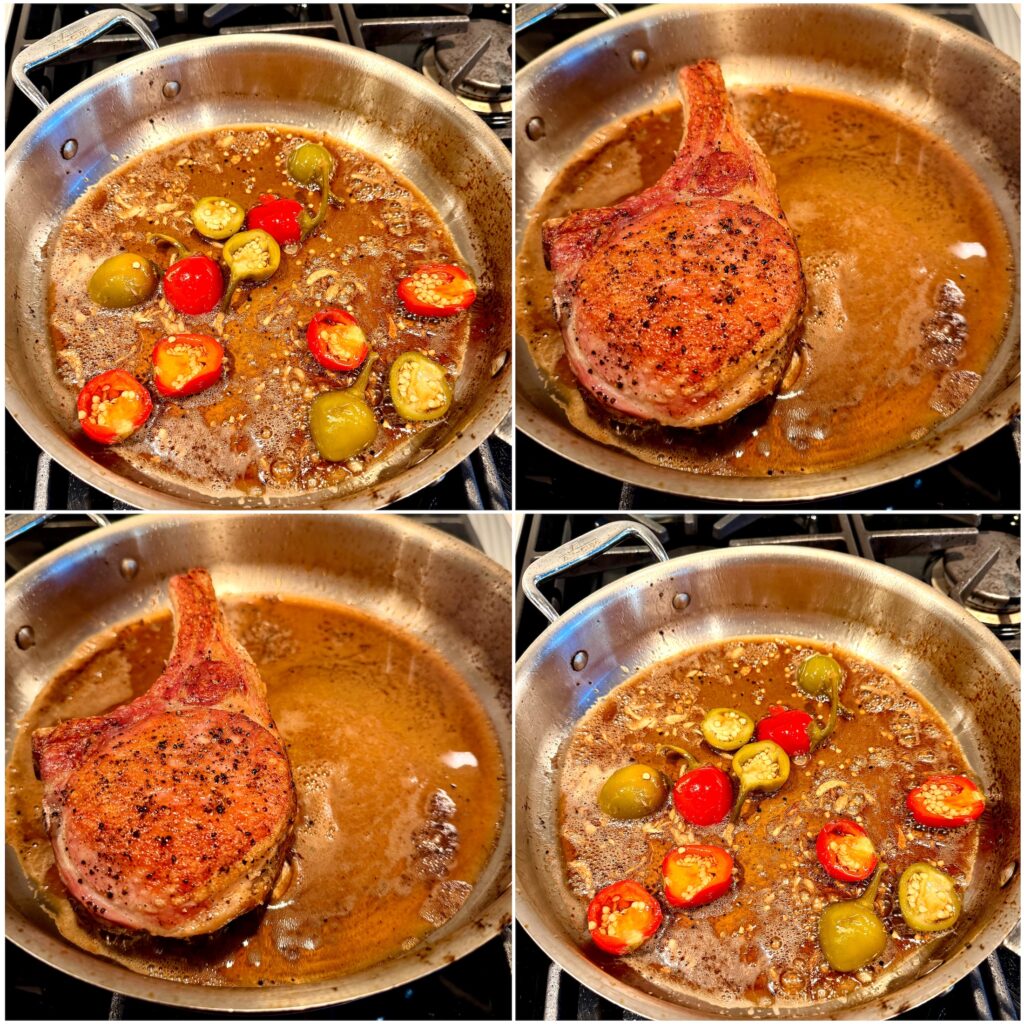
Heat avocado oil in a stainless pan until hot. First sear the fat on the side of the chop. Then sear each side. When the second side is almost done, lower the heat, wait about a minute then add butter to the pan and baste both sides of the chop.
Remove chop to a clean wire rack and keep warm.

Pickled Cherry Pepper Sauce
- 2 – 3 garlic cloves, shaved
- 6 pickled sweet cherry peppers, rinsed then halved
- 2 T. dry vermouth
- 1/4 c. chicken stock
- 1 1/2 t. dijon mustard
Add garlic and peppers to the same pan over medium heat and cook for three minutes until the garlic is golden. Raise the heat and add vermouth, chicken stock, and mustard. Cook until reduced by half, about another 3 minutes.
Polenta
When the chop is almost done cooking in the oven, make the polenta.
- 3 c. water
- 1 t. salt
- 1 c. yellow corn polenta
- 1/2 c. parmesan, shredded
- 2 T. heavy cream
Bring water and salt to a boil in a medium pot. Whisk in polenta and reduce heat. Cook on low heat for 5 minutes, whisking often. After 5 minutes add Parmesan and stir until melted. Cover until ready to serve.

When ready to plate, add a bit more water to the polenta and reheat if necessary. Finish by whisking in a splash of heavy cream. (This recipe makes more polenta than needed for this one dish).

To Plate
- parsley
Ladle polenta onto a warm serving plate. Place chop in the center. Spoon sauce and peppers over and around the chop. Garnish with parsley.
Notes
This 2026 version is built on a foundation that goes back even further… my 2013 recipe was inspired by a classic pork chop from the 1950s at Bamonte’s restaurant in Brooklyn, NY, still popular today and beloved for its comforting, old-school flavors.
Here, the updated version features a Kurobuta double-bone pork chop and the reverse-sear technique, elevating the dish while honoring its roots. And while the original dish didn’t call for polenta, the addition of creamy Parmesan polenta turns the dish into a complete plate, adding savory richness and welcome balance.
Discover more from Taste With The Eyes
Subscribe to get the latest posts sent to your email.
One thought on “Reverse-Sear Kurobuta Double-Bone Pork Chop”