Mom’s Vintage Potato Salad & Franciscan Earthenware

Mom's Vintage Potato Salad & Franciscan Earthenware

Mom’s Vintage Potato Salad & Franciscan Earthenware

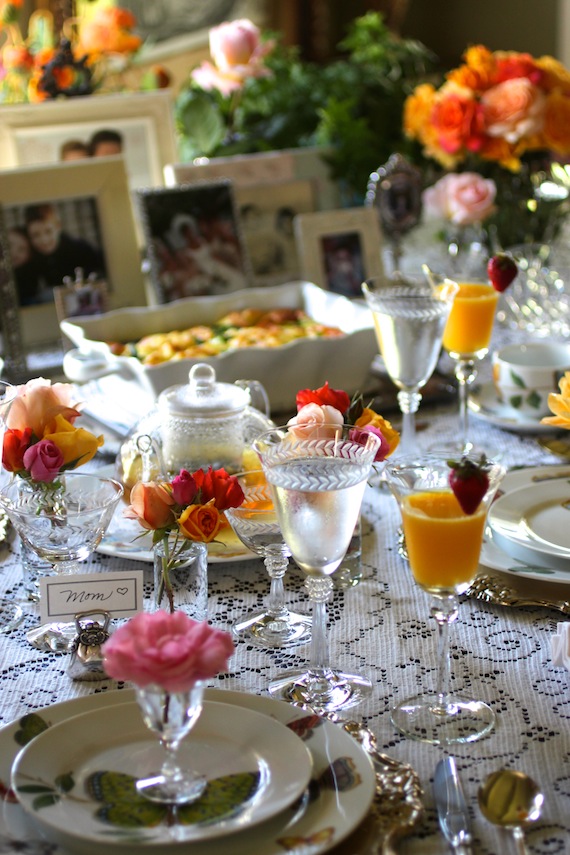
Franciscan Earthenware was a wedding gift to my father and his first wife. My mother “inherited” this china when she married him. We’ve enjoyed her home-cooked meals on these dishes for well over a half century.

We still have most of the pieces, a few are chipped, but overall a fine collection in great condition. This china has proven to be very durable. Back in 2008 Ma graciously lent me several pieces from her collection. As you may have read earlier, I am addicted to dinnerware. Now, with her passing, I am the keeper of the entire collection. And I will cherish it forever.

Joyce & Len
Joyce & Len – Sept. 1955

Franciscan Apple is one of the most popular raised-relief hand-painted patterns from Gladding, McBean & Co., which began production of Franciscan dinnerware in 1934 at their plant in Glendale, California. This pattern first appeared in 1940.

The name Franciscan is an allusion to Franciscan Friars and reflected the simple, informal style of Mexican folk pottery. The Franciscan Apple pattern has become a darling of collectors with its branches, beautiful green leaves and red harvest apples painted on cream-colored porcelain reminiscent of days gone by.

Mom's Vintage Potato Salad & Franciscan Earthenware

American production of Franciscan Ware ceased in 1984, following the announcement to relocate all Franciscan production to England. Franciscan Apple pattern is still made today under the Wedgwood Group. It is slightly different now and many pieces are larger than the originals, but still charming as ever.

Mom’s Vintage Potato Salad Recipe

Continue reading “Mom’s Vintage Potato Salad & Franciscan Earthenware”

Modern Cuisine – Cooking on the Cutting Edge

catering @ experium science academy

Modern Cuisine – Cooking on the Cutting Edge

“I think it is a sad reflection on our civilization that while we can and do measure the temperature in the atmosphere of Venus we do not know what goes on inside our soufflés.” —Nicholas Kurti

It’s the ultra-modern style of cooking. Although, all the way back in the 1800’s cooks and scientists were interested in understanding food chemistry. But it was not until 1988 that the term “Molecular Gastronomy” was coined by French chemist Hervé This and Hungarian physicist Nicholas Kurti. They began holding workshops to investigate the transformation that occurs when food is cooked.

making ice cream with liquid nitrogen

The molecular or modernist cuisine movement really began when chefs took those scientific discoveries and applied creativity to that body of knowledge. They take the basics of classic cooking and craftsmanship then apply chemical compounds and elements such as liquid nitrogen for instantaneous freezing and techniques such as spherification (forming a liquid into a solid orb which remains liquid on the inside) and gelification (turning a liquid into a gelatinous form by using a gelling agent) to push the culinary envelope.

Continue reading “Modern Cuisine – Cooking on the Cutting Edge”

Inspired by Ottolenghi

rigatoni, roasted oyster mushroom, arugula, smoky chile walnuts, garlicky yogurt, feta

rigatoni, roasted oyster mushrooms, arugula
smoky chile walnuts, garlicky yogurt, feta

While Chef Yotam Ottolenghi makes his with conchiglie, peas, pine nuts, and basil – my dish with rigatoni, oyster mushrooms, walnuts, and arugula was totally inspired from the recipe in his fabulous cookbook Jerusalem. 

There are endless combinations of pasta, vegetables, and greens that can work with this garlicky yogurt sauce, feta, and smoky chile walnuts. With its pretty earth-tones, varying textures, and smoky flavors – this is one super-satisfying vegetarian meal.

inspired by ottolenghi recipe

Continue reading “Inspired by Ottolenghi”

Cold Fusion Cuisine: Noodles, Peanut Butter Sauce, Banana

Cold Buckwheat Noodles, Peanut Butter Sauce, Banana

Cold Fusion Cuisine

Buckwheat Noodles, Peanut Butter Sauce
Banana, Serrano, Scallion, Peanut, Cilantro

Cold Fusion: The hypothetical process of creating energy at room temperature by the fusion of hydrogen atoms into helium. If possible, this process could potentially provide unlimited cheap energy for all of humanity. One problem – scientists have never been able to duplicate that 1989 experiment.

Fusion Cuisine: The melding or blending flavors, foods, or techniques from the cuisine of one or more regions, cultures, or ethnicities.

Cold Fusion Cuisine: The harmonizing of foods from different regions into a stellar cold dish. One rarely sees peanuts or peanut butter in Korean cuisine. Here I’m pairing fresh Korean buckwheat noodles with a zippy sauce made with peanut butter and banana.

Cold Food Festival: Hansik Day is a traditional Korean holiday which falls on April 5. The festival is a time to honor one’s ancestors and welcome warmer weather. Like the Chinese, Koreans eat cold food on this day. Try my cold buckwheat noodles, with peanut butter sauce and Szechwan peppercorns for an energetic celebration of flavors!

Buckwheat Noodles, Peanut Butter Sauce Recipe

Continue reading “Cold Fusion Cuisine: Noodles, Peanut Butter Sauce, Banana”

Korean Cold Noodles with Crab & Asparagus (Bibim Naengmyeon)

Korean Cold Noodles with Crab & Asparagus (Bibim Naengmyeon)

Korean Mixed Cold Noodles with Crab & Asparagus (Bibim Naengmyeon)

As the weather warms, we’re looking forward to cooler dishes. Bibim naengmyeon is a Korean spicy cold buckwheat noodle dish typically served with cucumber, radish, and hard boiled egg. Sometimes sliced beef and Korean pear are added. To celebrate springtime, I’m making my bibim (mixed) naeng (cold) myeon (noodle) with asparagus and Dungeness crab.

Korean Mixed Cold Noodles Recipe

Continue reading “Korean Cold Noodles with Crab & Asparagus (Bibim Naengmyeon)”