Lemon Ricotta Pasta Salad with Figs and Mint

Lemon Ricotta Pasta Salad with Figs and Mint
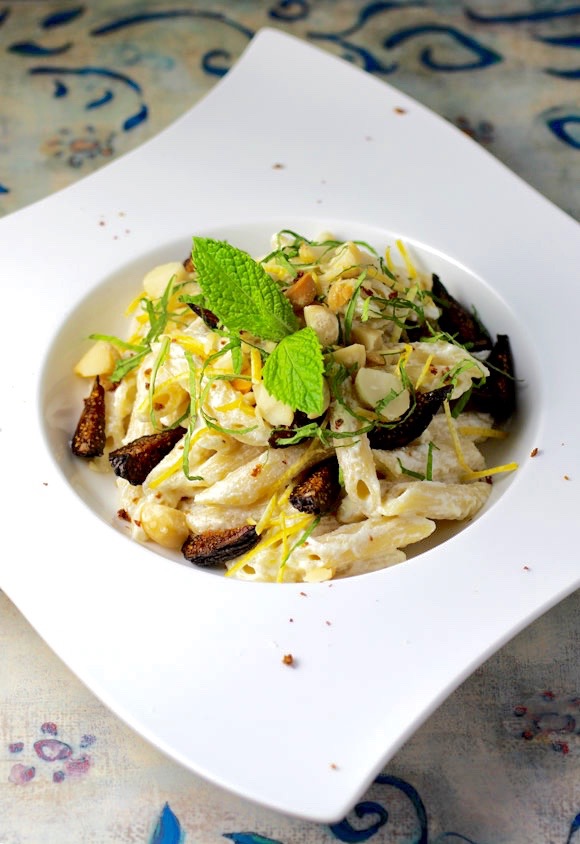
Lemon Ricotta Pasta Salad
with
Figs, Mint, Macadamia Nuts

Light, lemony, and refreshing. Perfect for a picnic side dish or a lunch on the veranda served with a chilled glass of crisp Sauvignon Blanc. Nuts and fruit, lemon and mint – pair with crema di ricotta to make a pasta salad just meant to be enjoyed on a warm day in brilliant sunshine.

Fresh figs have two seasons in California – the first two weeks in June, then the second season runs August through October. If fresh figs are available, by all means try them in this salad – but if not, dried figs work just as well.

Lemon Ricotta Pasta Salad Recipe

Continue reading “Lemon Ricotta Pasta Salad with Figs and Mint”

Gochujang Chicken Adobo and Chef Hooni Kim

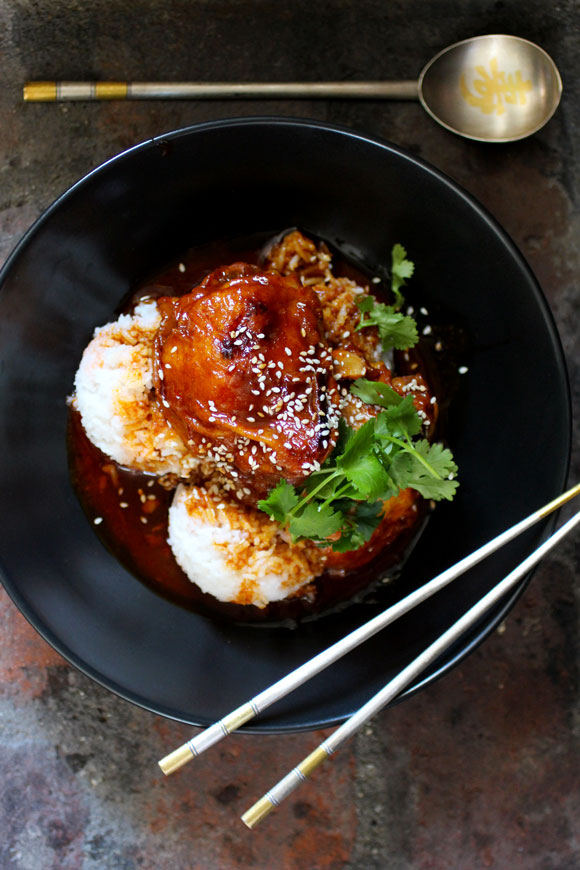
Korean-Filipino Gochujang Chicken Adobo

“The food that you cook has to come from within.”
Chef Hooni Kim to the students of Le Cordon Bleu in Pasadena, May 5, 2015.

Invited by the Korean Cultural Center Los Angeles to demonstrate Korean cooking to the students at Le Cordon Bleu cooking school, he flew across the country to share his passion. With such a broad subject to cover in one class, Chef Hooni Kim decided to focus on a few special ingredients, ones that really give Korean cuisine its unique flavors.

One of these special ingredients is gochujang – the red chili paste with sweet heat and a fermented umami richness. It is definitely spicy – but also has a balanced fruitiness, slight smokiness and depth of flavor from the sun-dried Korean red peppers.

“I like to share Korean flavors and Korean culture through my restaurants. Not only do I feel like I need to cook delicious food, I need to teach a bit about Korea through the flavors.”

The menu at his Michelin-starred New York City restaurant Danji was inspired by his Korean-American heritage and his New York stomping grounds. The second restaurant, Hanjan, features pure Korean cuisine inspired by all his trips to Korea, the place of his birth.

Continue reading “Gochujang Chicken Adobo and Chef Hooni Kim”

Lemon Risotto Balls with Edible Flower Confetti

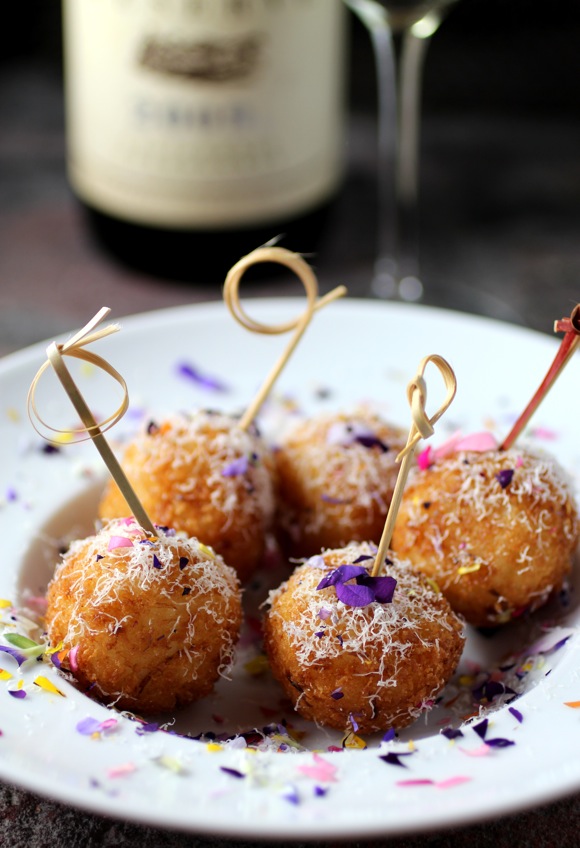
meyer lemon arancini, lemon rice balls, ciao fiore appetizer

Meyer Lemon Risotto Balls with Parmesan and Mascarpone
Edible Flower Confetti

Crispy on the outside – warm, creamy, cheesy, and lemony on the inside – these little risotto balls (arancini in Italian) are simply irresistible. And if the texture and flavor aren’t enough to make you swoon, I’m dressing them up with pretty flower petal confetti and lacy Parmigiano-Reggiano. Serve them with your favorite Italian white wine and enjoy happy hour!

Meyer Lemon Risotto Recipe

Continue reading “Lemon Risotto Balls with Edible Flower Confetti”

Doenjang Adds Umami Notes to Mashed Potatoes

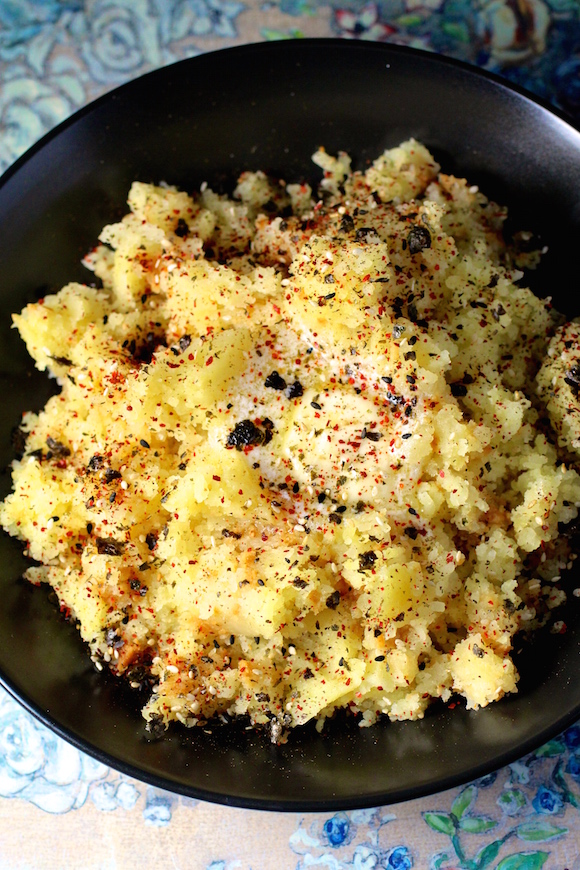
Doenjang 된장 Mashed Potatoes Butter, Roasted Seaweed, Gochugaru, Sesame Seed, Black Pepper

Doenjang 된장 Mashed Potatoes
Butter, Roasted Seaweed, Gochugaru, Sesame Seed, Black Pepper

Umami is the savory taste and round mouth-feel imparted by glutamate and nucleotides found in certain foods. Doenjang, that funky-chunky-fermented-aged Korean soybean paste, has an exceptionally robust umami profile.

In 1908, a chemistry professor at Tokyo Imperial University was intrigued by the complex flavor and deliciousness of dashi, a simple Japanese soup base made from seaweed. Upon investigation, Dr. Kikunae Ikeda was able to isolate the principal flavor ingredient of kombu (the kelp used to make dashi). Using classical chemistry procedures he identified this substance as glutamic acid.

Glutamic acid is a type of amino acid, which are the building blocks of proteins. Bound with minerals such as sodium, potassium, or magnesium – glutamic acid becomes glutamate, a salt. It is the salt form of glutamic acid that elicits the taste. Following Ikeda’s glutamate discovery, other foods were determined to be sources of umami, and that the process of fermentation forms and releases amino acid and nucleotide compounds as well.

Doenjang is made from dried soybeans which are boiled and stone-ground into a coarse paste, then formed into blocks called meju and allowed to ferment with the help of warmth or sunlight and bacteria. One to three months later, the blocks are placed in large pottery jars and covered with a very salty brine as the fermentation process continues.  At the end of the long process the liquid is filtered off, this liquid is Korean soy sauce called ganjang, and the remaining solids are our salty-earthy-complex-umami rich paste with a pungent aroma – called doenjang.

Doenjang 된장 Mashed Potatoes Recipe

Continue reading “Doenjang Adds Umami Notes to Mashed Potatoes”

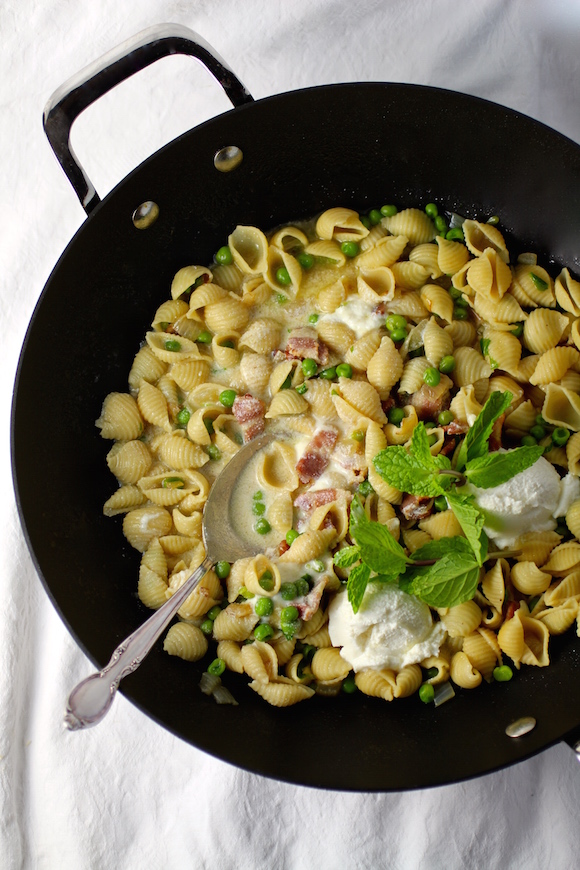
Pasta with Peas, Bacon, Mint, and Ricotta

Pasta with Peas, Bacon, Mint, and Ricotta

Pasta with Peas, Bacon, Mint, and Ricotta

It’s a sprightly mash-up of two traditional Italian pasta dishes: Paglia e Fieno and Pasta e Fagioli. Paglia e fieno, translates to “straw and hay” named for its two color fettuccine made from both egg and spinach. The yellow and green pastas are typically paired with prosciutto and peas and Parmesan. Pasta e fagioli is a brothy dish combining pasta and beans.

Here, conchigliette (small pasta shells) are paired with peas and bacon in a flavorful chicken and vermouth-based broth, brightened with fresh mint. Scoops of whole milk ricotta are stirred into the broth taking the place of the traditional rich Parmesan cream sauce. A sprightly mash-up indeed.

Pasta with Peas, Bacon, Mint, and Ricotta Recipe

Continue reading “Pasta with Peas, Bacon, Mint, and Ricotta”