
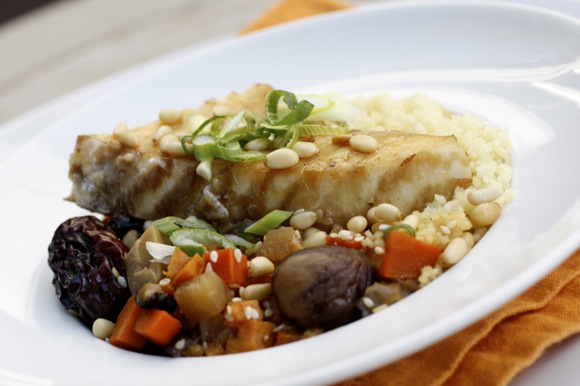
Braised (sustainable) Halibut Tagine
Wild Alaskan Halibut Steak
Served over Couscous
Chestnut, Asian Pear, Dried Jujube, Sweet Potato, Daikon & Carrot Stew
Sesame, Pine Nut & Green Onion Garnish
Natasha, the 5 Star Foodie & Lazaro of Lazaro Cooks! host the 5 Star Makeover Cooking Group, a fabulous monthly event for “sharing ideas and creating gourmet makeovers of selected classic dishes or flavor combinations.”
March’s assignment is Sustainable Fish: “Sustainability is an important issue for us and what better way to get the word out than by cooking some amazing sustainable fish on all our blogs. You can prepare the whole fish or portions, featuring a makeover of any classical preparation of fish, just find a sustainable fish and make it shine.”
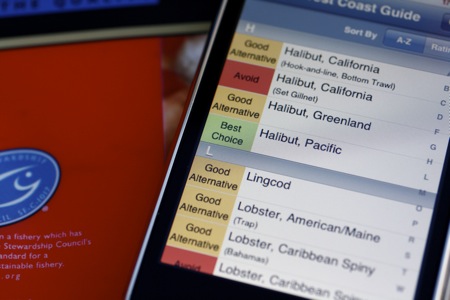
A Best Choice: Halibut, Pacific
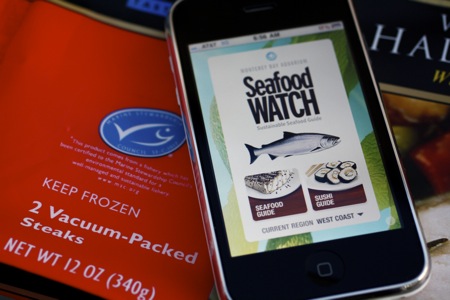
Seafood Watch App for Android and iPhone here.
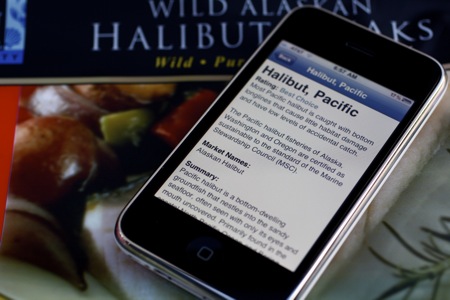
Halibut, Pacific
Rating: Best Choice
Most Pacific halibut is caught with bottom longlines that cause little habitat damage and have low levels of accidental catch.
The Pacific halibut fisheries of Alaska, Washington, and Oregon are certified as sustainable to the standard of the Marine Stewardship Council.
Market Name: Alaskan Halibut
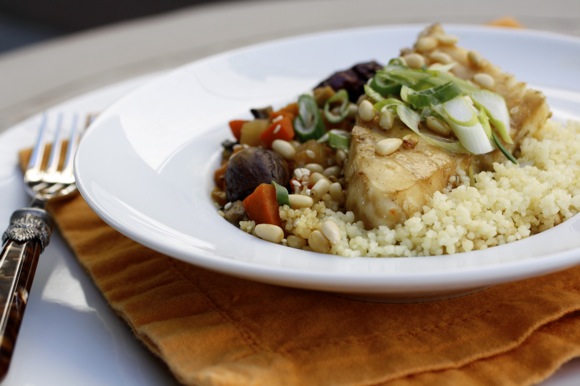
I have fallen in love with hansik – Korean Food. Here we employ the ingredients of the classic Korean Braised Short Rib Stew, Galbi Jim, and create a unique dish featuring sustainable Alaskan halibut.
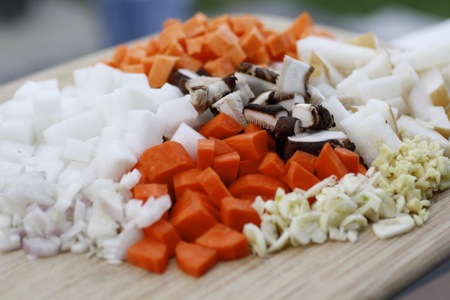
Daikon, Sweet Potato, Asian Pear, Shiitake, Carrot, Shallot, Garlic, Ginger
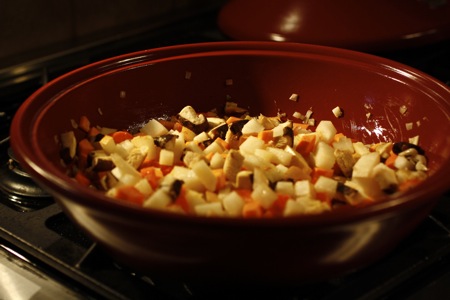
Sauté the vegetable mélange in a tagine with toasted sesame oil until softened.
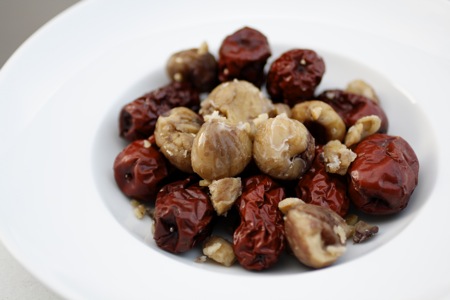
Add 1/4 c. mirin, dried jujube (red date), and whole peeled & cooked chestnut.
Cook until mirin has reduced by half.
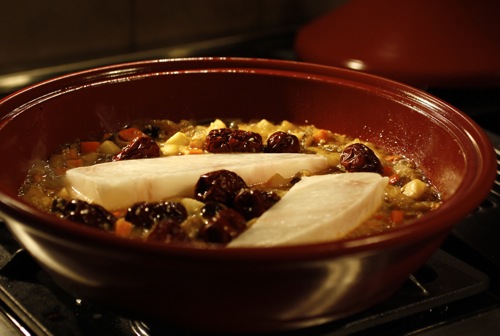
Add 1 c. dashi (or fish stock) and 1 1/2 T. low-sodium soy sauce. Bring to a boil.
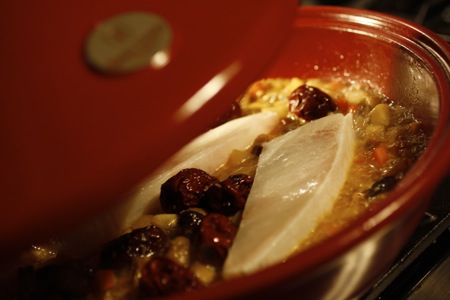
Add frozen halibut steaks. Cover tagine and simmer for 5 minutes.
Then turn off the heat and let the tagine sit, covered, for another 5 minutes
or so until the halibut is just cooked through.
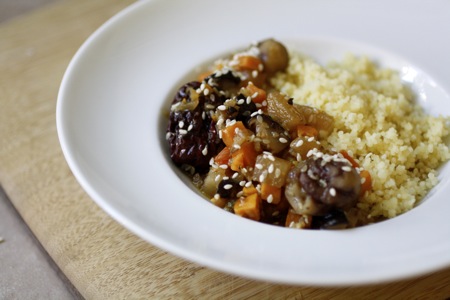
Place couscous and vegetable stew (with plenty of sauce) in a shallow dish. Top with halibut steak.
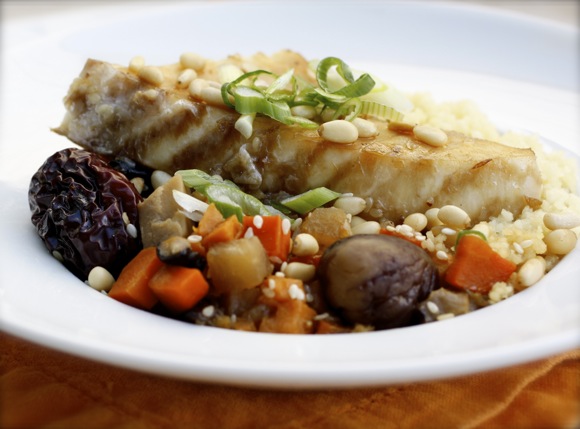
Garnish with sesame seed, sliced scallion, and pine nut.
Kudos to Lazaro & Natasha for choosing an excellent theme for this month’s cooking club!
Discover more from Taste With The Eyes
Subscribe to get the latest posts sent to your email.
Beautiful!! Kind of like a jap chai, but without the noodles. I love the addition of the jujubes- an ingredient I’ve never played with. A perfectly light, flavorful and satisfying dish!
Hi Jennifer – I considered preparing salmon over japchae, but settled on this halibut dish but I still plan to make the salmon japchae one day soon.
Thanks for your comment.
LL
I’ve never heard of this Korean dish… what an amazing combination of flavors! I love chestnuts in anything so this is really something that appeals to me. You make me want to expand my horizons and try something new.. exactly what this challenge was about!
Hi Deana – please click on my link to galbi jim, I’m sure you’ll love it.
This was a terrific challenge, no?
LL
Lori Lynn,
Magnificent. All the way around. Information. Cool App. Photos. Fish selection, one of my all time favorites. Flavor combination. Creative critical thinking.
Two thumbs way, way up!
Bravo.
Hi Lazaro – you made my day 🙂 I’m so glad you like it!
And thank you for choosing such a great theme for the Cooking Club!
LL