Salmon, Poisson Cru Style

Salmon, Poisson Cru Style

Salmon, Poisson Cru Style
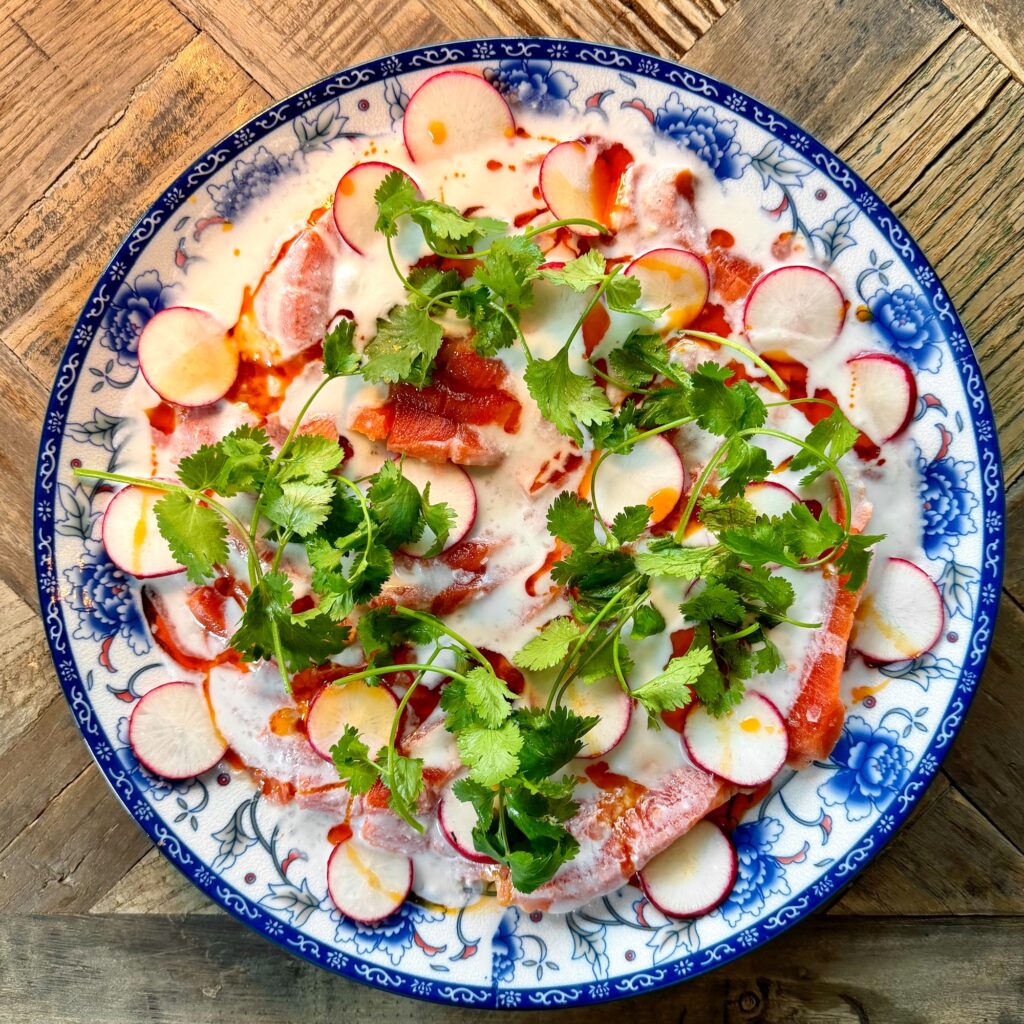
Coconut Milk, Lime, Chili Oil
Radish, Cilantro
🐟 🥥 🌴

I had been meaning to share a version of Poisson Cru ever since my brother sent a photo of his boat while cruising in Tahiti. A friend of his there wrote to me afterward and said I had to try that island’s take on raw fish, especially since I’ve shared several crudo-style dishes here on Taste With The Eyes.

Poisson Cru—often considered the national dish of Tahiti—is beautifully simple. At its core, it’s raw fish, citrus, coconut milk, and some crisp vegetables. It’s often compared to ceviche, but the coconut milk shifts the balance, softening the acidity and giving the dish a smoother, more rounded finish.

Sand Pebble in Tahiti

Traditionally, it’s made with just-caught fish, most commonly tuna or other local reef fish. My version takes a different route.

Salmon are not found in the tropical waters of Tahiti. The water temperature is far too warm for them, so they’re not part of the local catch. But here, the Alaska salmon and coconut milk work beautifully in their own way. The sliced radish adds crunch along with a light peppery bite that cuts through the coconut milk, sesame chili oil brings nutty heat, while cilantro layers in a cool, herbal note.
Salmon, Poisson Cru Style Recipe

Continue reading “Salmon, Poisson Cru Style”

Crudo vs. Tataki

Crudo vs. Tataki

Crudo vs. Tataki

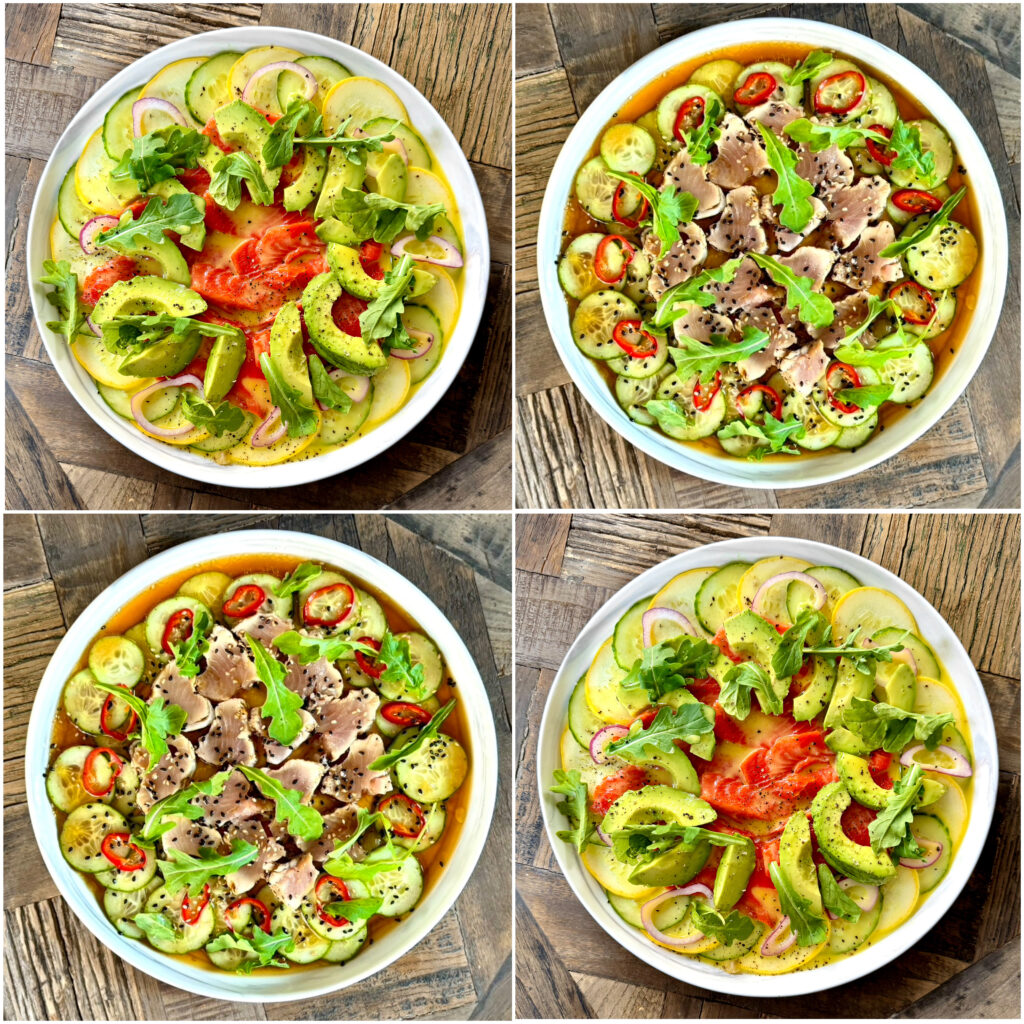
Sockeye Salmon Crudo, Albacore Tuna Tataki

Crudo is an Italian preparation that means “raw.” It showcases premium seafood served completely uncooked and chilled. Thin slices of fish are lightly dressed—often with olive oil, citrus juice, and salt—to highlight their natural flavor. The focus is on clean, delicate taste and freshness, with accompaniments playing supportive roles the seafood itself.

Tataki comes from Japan and involves a quick sear rather than leaving the fish entirely raw. The exterior is briefly cooked over high heat, creating a smoky, caramelized crust while keeping the center cool and mostly raw. After searing, the fish is sliced and served with sauces such as ponzu or soy, and crisp garnishes like daikon (or cucumber), which enhance the flavor and texture while letting the contrast between the seared exterior and tender interior shine.

Together, crudo and tataki show two distinct ways to let high-quality seafood take center stage…

Crudo vs. Tataki Recipes

Continue reading “Crudo vs. Tataki”

Salmon Crudo, Smoked Soy

Salmon Crudo, Smoked Soy

Salmon Crudo, Avocado, Jalapeño
Smoked Soy, Olive Oil, Lemon Juice, Microgreens

This simple yet sublime salmon crudo dish hits all the notes. Pristine raw wild Alaska sockeye is shingled with creamy avocado slices and spicy jalapeño then drizzled with smoked soy sauce, fruity olive oil, and a squeeze of lemon juice. Just a touch of flaky sea salt and a scatter of vibrant peppery microgreens complete the dish.

But it’s really the smoked soy that pushes this dish over the top — unexpected and distinctive. A few drops of all-natural hickory liquid smoke transforms plain soy sauce into something magical.

Seasoned sushi rice is served on the side, great for dipping in the intoxicating sauce and pairing with bites of salmon.

Cold sake makes a crisp and refreshing accompaniment to the salmon crudo’s bright, clean flavors of citrus, soy, and olive oil. The chilled sake mirrors that cool, clean mouthfeel, keeping the palate refreshed instead of weighing it down.

Salmon Crudo, Smoked Soy

Salmon Crudo Recipe

Continue reading “Salmon Crudo, Smoked Soy”

Tuna Poke Tostadas, Avocado Crema

Tuna Poke Tostadas, Avocado Crema

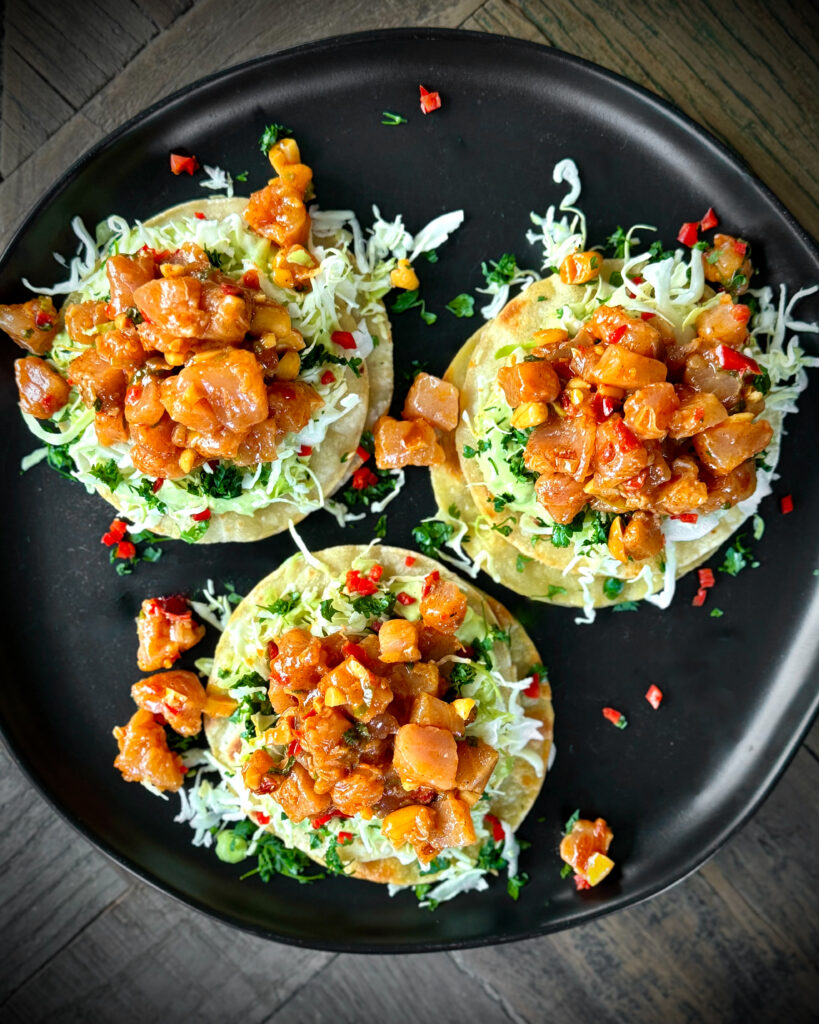
Albacore Tuna Poke Tostadas
Chile Marinade with Peanuts
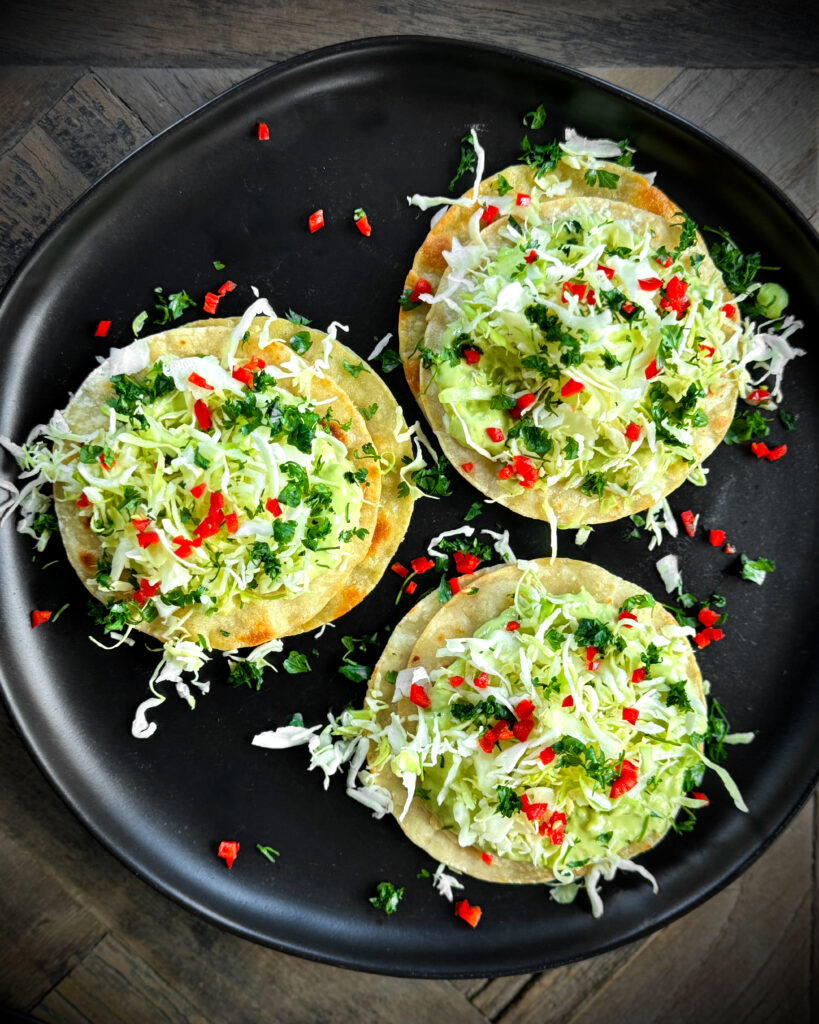
Avocado-Tomatillo Crema
Green Cabbage, Red Chile, Cilantro

Poke is a traditional Hawaiian delicacy, featuring marinated chunks of raw fish, often tuna, seasoned with soy sauce, sesame oil, seaweed, and onions. The term poke originates from Hawaiian, meaning “to slice” or “to cut crosswise into pieces.”

The surge in popularity of poke owes much to figures like Sam Choy, affectionately known as the “Godfather of Poke.” I had the privilege of interviewing him back in 2014. Charming and dynamic, Sam Choy is a celebrated chef and restaurateur who played a significant role in spreading the appeal of poke globally.

While poke has its roots firmly planted in Hawaiian culture, it has transcended boundaries and become a beloved dish worldwide.

Here, a delightful example of this cross-cultural fusion is Tuna Poke Tostadas with Avocado-Tomatillo Crema. This dish seamlessly blends the flavors of Hawaii and Mexico, offering a tantalizing culinary experience that showcases the best of both traditions.

Tuna Poke Tostadas, Avocado Crema

Tuna Poke Tostadas Recipe

Continue reading “Tuna Poke Tostadas, Avocado Crema”

Scallop Lettuce Wraps, Truffle Sauce

Scallop Lettuce Wraps, Truffle Sauce

🥬 Scallop Lettuce Wraps 🥬
🌿 Truffle Sauce with Chervil 🌿
🌼 Radish, Edible Flowers 🌸

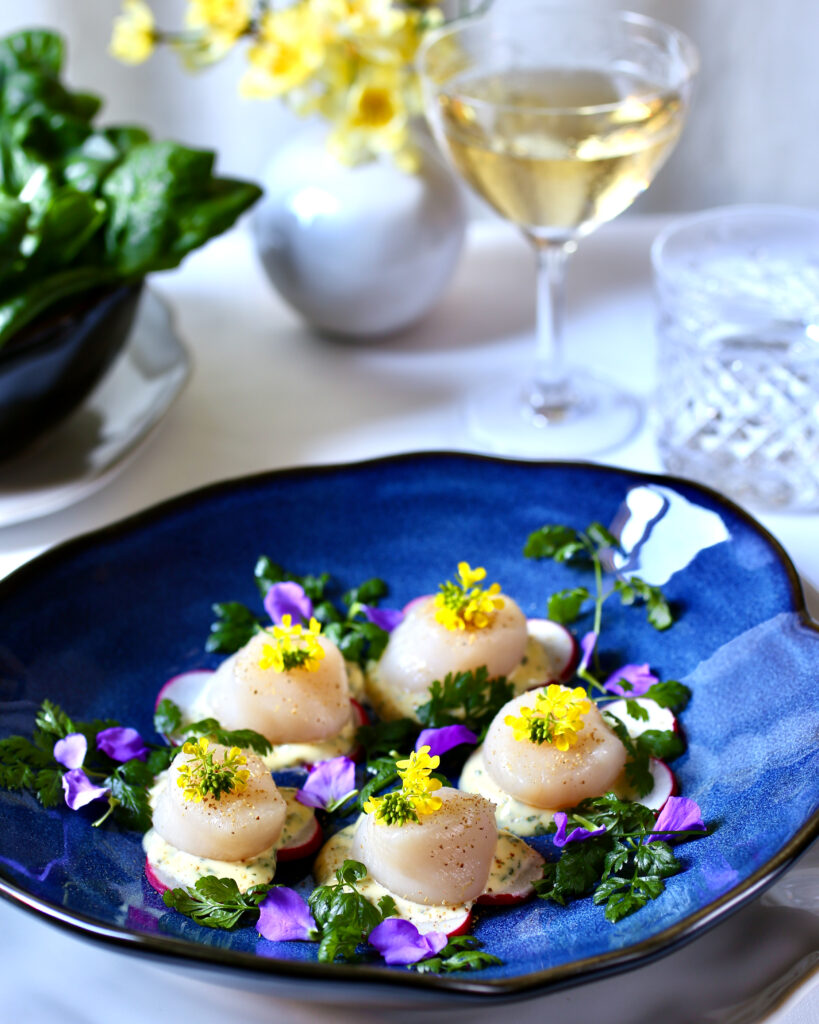
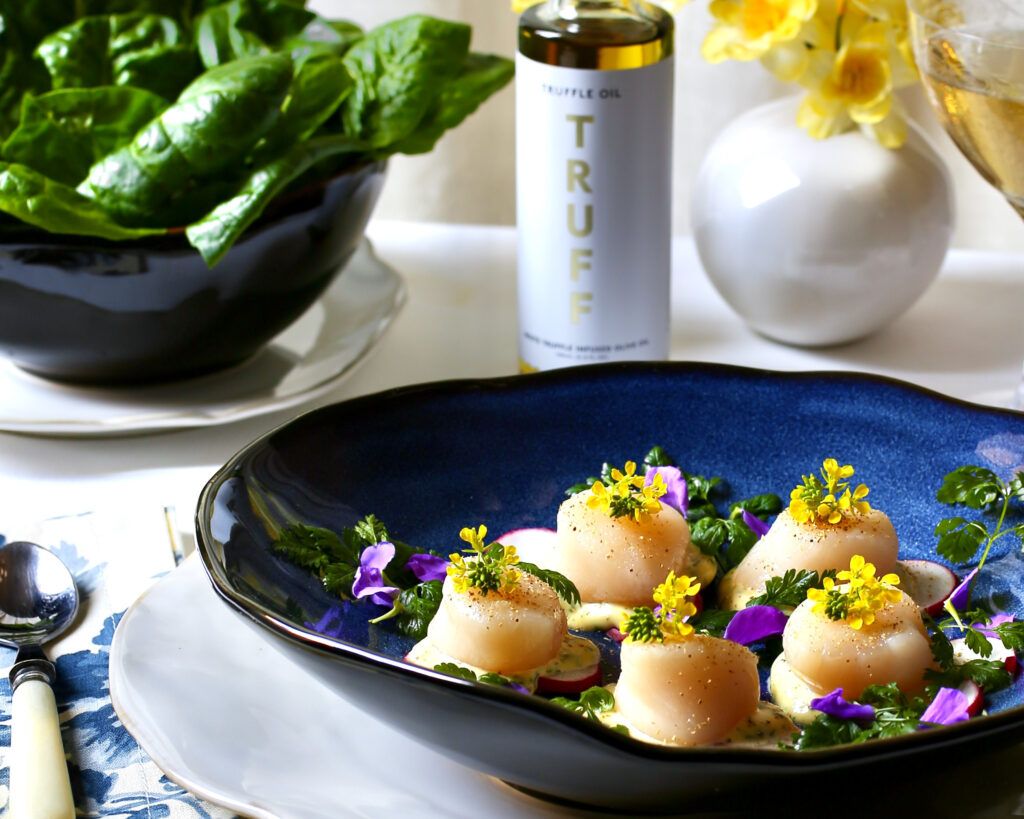
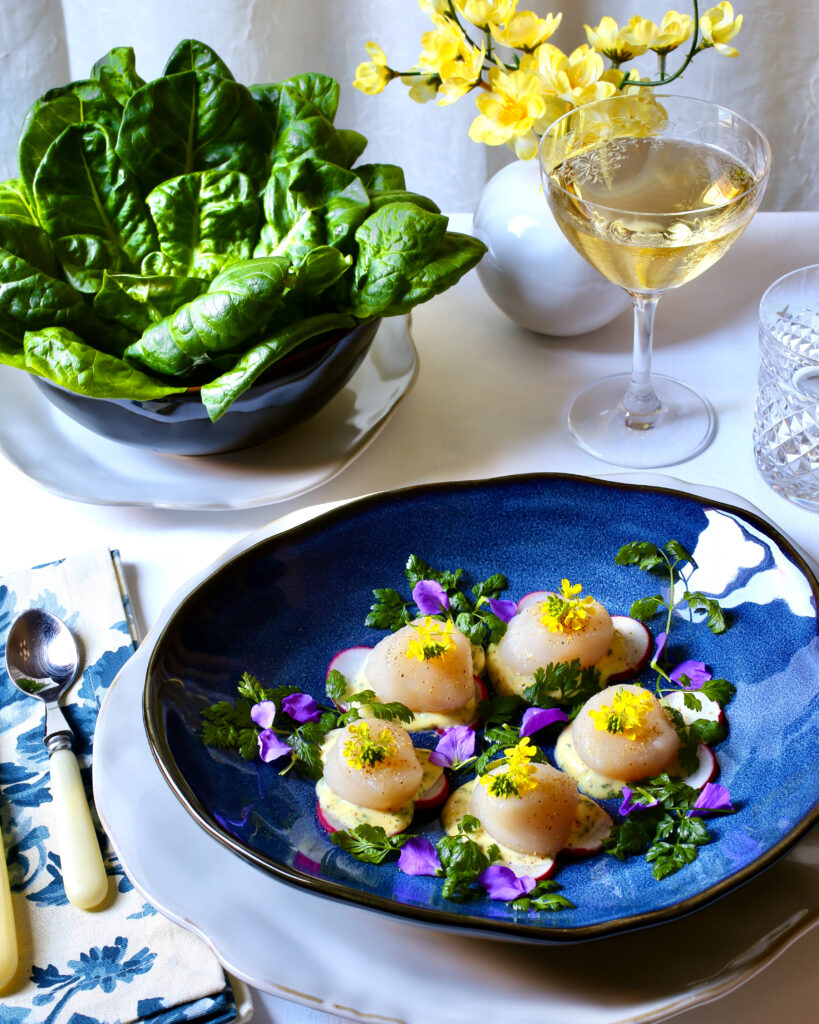
Raw, buttery day-boat Sea Scallops, renowned for their subtle sweetness and delicate velvety texture, are paired with crisp, peppery radish slices and a heavenly truffle sauce infused with chervil. These delightful scallop clusters are then wrapped in tender little gem lettuce leaves, creating an exquisite culinary experience.

Scallop Lettuce Wraps, Truffle Sauce

Mizuna Blossoms and Stock Flower Petals

Mizuna blossoms share a similar flavor profile with the leaves of the mizuna plant, offering a mild yet peppery taste with hints of Chinese mustard.

Stock flowers are known for their dense clusters of fragrant blooms that come in a variety of colors, including white, pink, purple, and shades of red and yellow. They have a snappy radish-like flavor with floral undertones. The taste can vary depending on the variety and growing conditions.

While their beauty is undeniable, the garnishes serve a purpose beyond aesthetics. They play a crucial role in enhancing the dish, contributing elements of both mustard and radish to the final flavor profile.

Scallop Lettuce Wraps, Truffle Sauce

About Maine Day-Boat Scallops

They are harvested by fishermen that go to work in the icy waters then return to port that same day.

Since the fishing trip is short, day-boat scallops do not need to sit on melting ice like longer expeditions, and therefore do not absorb water over the course of the trip.

The taste is pure and natural, as the scallops are not bloated with water after harvest. These scallops are treated with the utmost care, and never soaked in a solution of sodium tripolyphosphate which is commercially used as a preservative but unfortunately degrades the quality of the scallop. Day-boat scallops are always more expensive but worth every penny in taste and texture.

Note: Our fishermen tell us to NEVER let scallops touch fresh water as they soak it up like sponges!

Scallop Lettuce Wraps, Truffle Sauce Recipe

Continue reading “Scallop Lettuce Wraps, Truffle Sauce”