Salmon Rice with Hijiki Seaweed

Salmon Rice with Hijiki Seaweed

Salmon Rice with Hijiki Seaweed
🐟 🍚 🌿

Hijiki is a dried Japanese sea vegetable that looks like thin, wiry black strands and is typically rehydrated before cooking. Once it softens, it takes on a tender, slightly chewy texture and a deep, savory flavor with subtle mineral notes from the sea.

Salmon Rice with Hijiki Seaweed

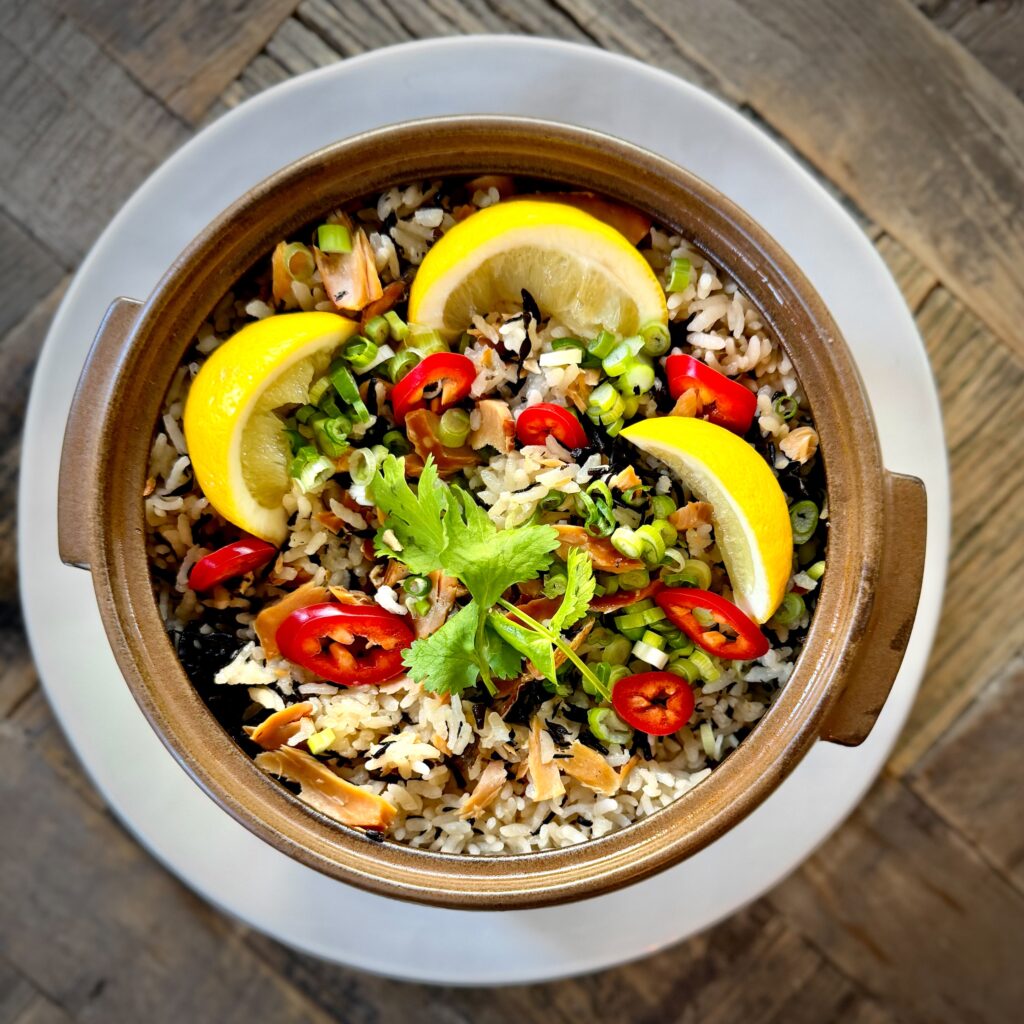
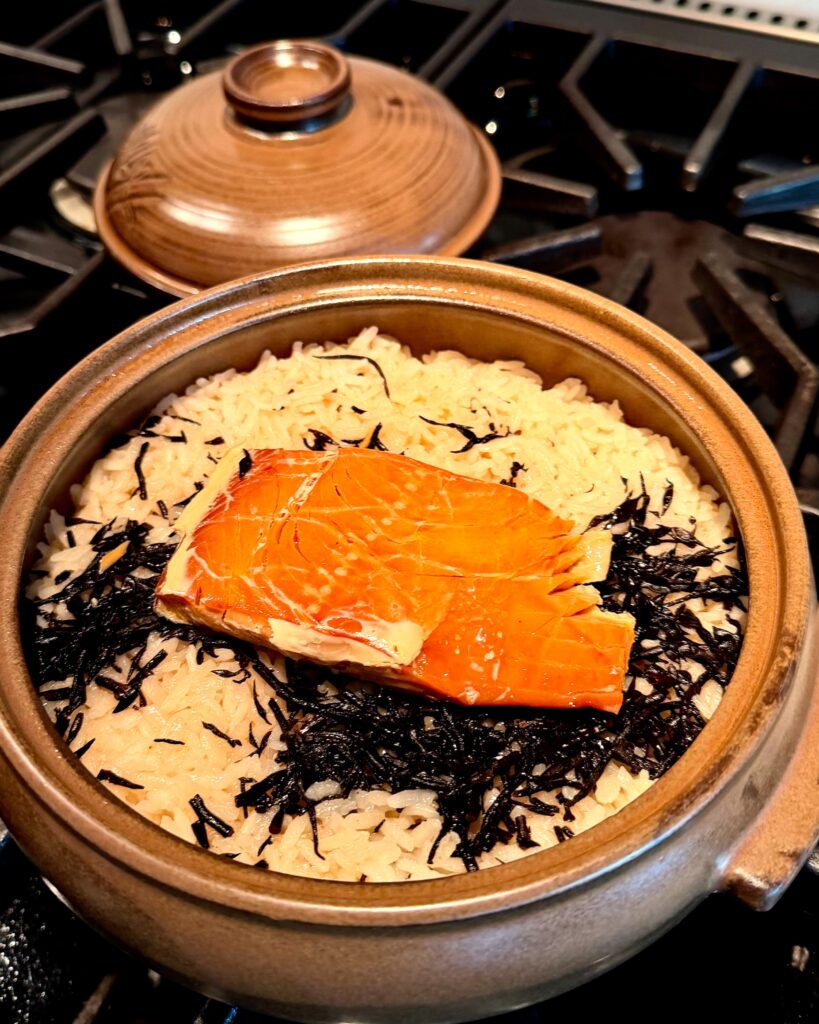
Here, it cooks right alongside short grain rice in a light dashi seasoned with sake, soy sauce, and a touch of sesame oil, infusing the grains with oceanic character. That makes it an especially natural partner for hot-smoked salmon. Set over the warm rice to gently heat through, the fish releases its seasoned oils—salt, a hint of brown sugar, and alderwood smoke—into the grains below.

Salmon Rice with Hijiki Seaweed

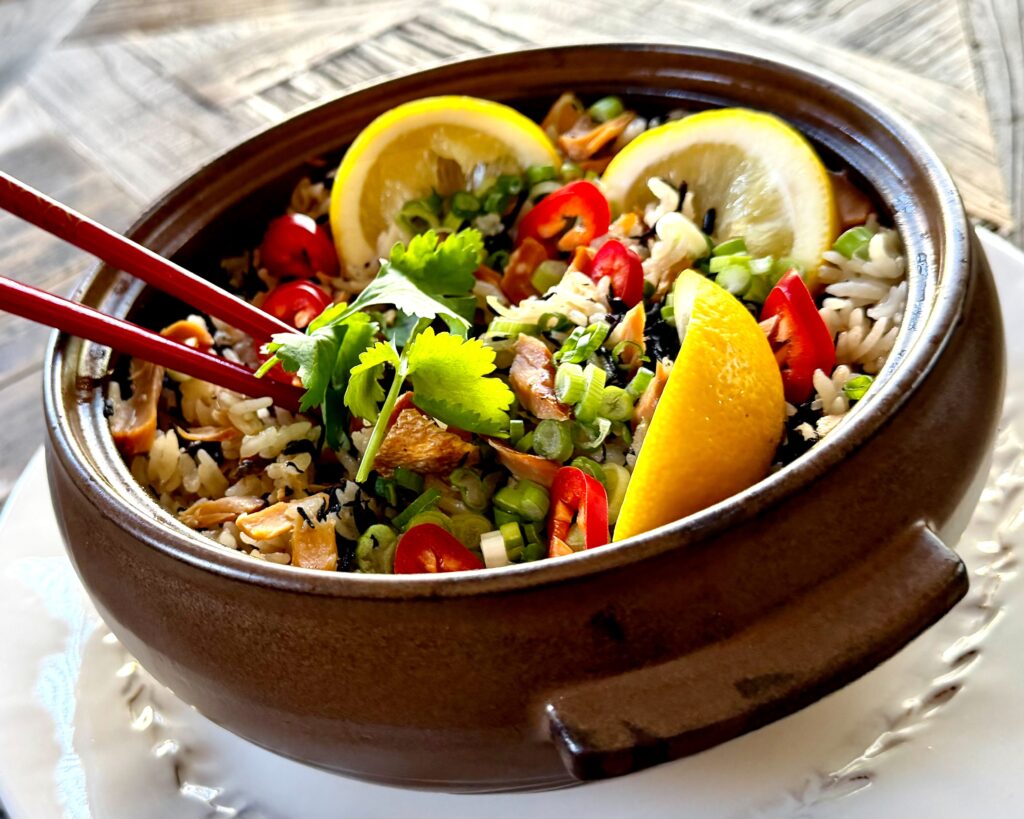
Finished with sliced scallions, fresh cilantro, thin rounds of Fresno chile, and lemon wedges for brightness, it’s deeply savory and completely crave-worthy.

Salmon Rice with Hijiki Seaweed Recipe

Continue reading “Salmon Rice with Hijiki Seaweed”

Seaweed Soup with Pork and Tofu (Miyeok Guk)

Seaweed Soup with Pork and Tofu (Miyeok Guk)

Miyeok Guk
🥣 🌊 🥢
Seaweed Soup
with Pork and Tofu

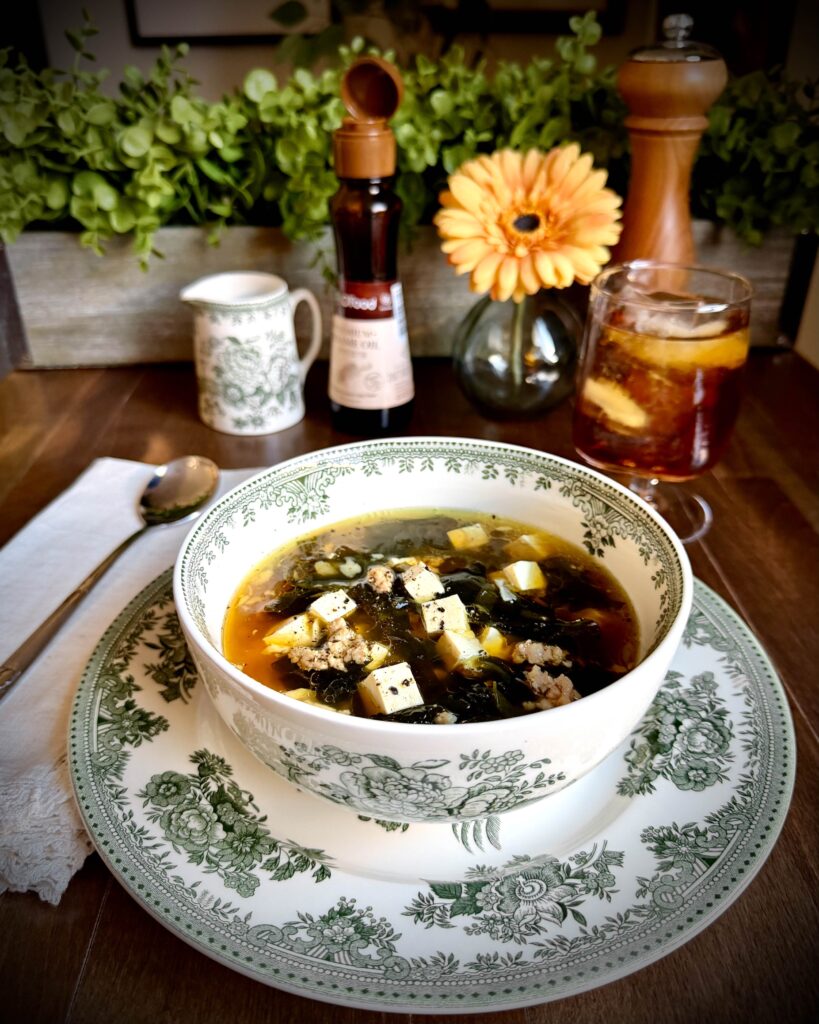
Miyeok guk is one of those quietly meaningful Korean soups that carries far more significance than its simple ingredients might suggest. In South Korea, it is traditionally eaten on birthdays to honor mothers, since seaweed soup is commonly served to women after childbirth for its nourishing and restorative qualities.

In Korean, guk simply means soup, and it’s a fundamental part of everyday meals — savory broths that accompany rice at the table. Classic miyeok guk is most often made with thinly sliced beef, though some coastal versions use mussels. The version here is a personal variation rather than a traditional preparation, with ground pork adding a savory backbone that pairs nicely with the clear broth, garlic, and sesame.

Seaweed Soup with Pork and Tofu (Miyeok Guk)

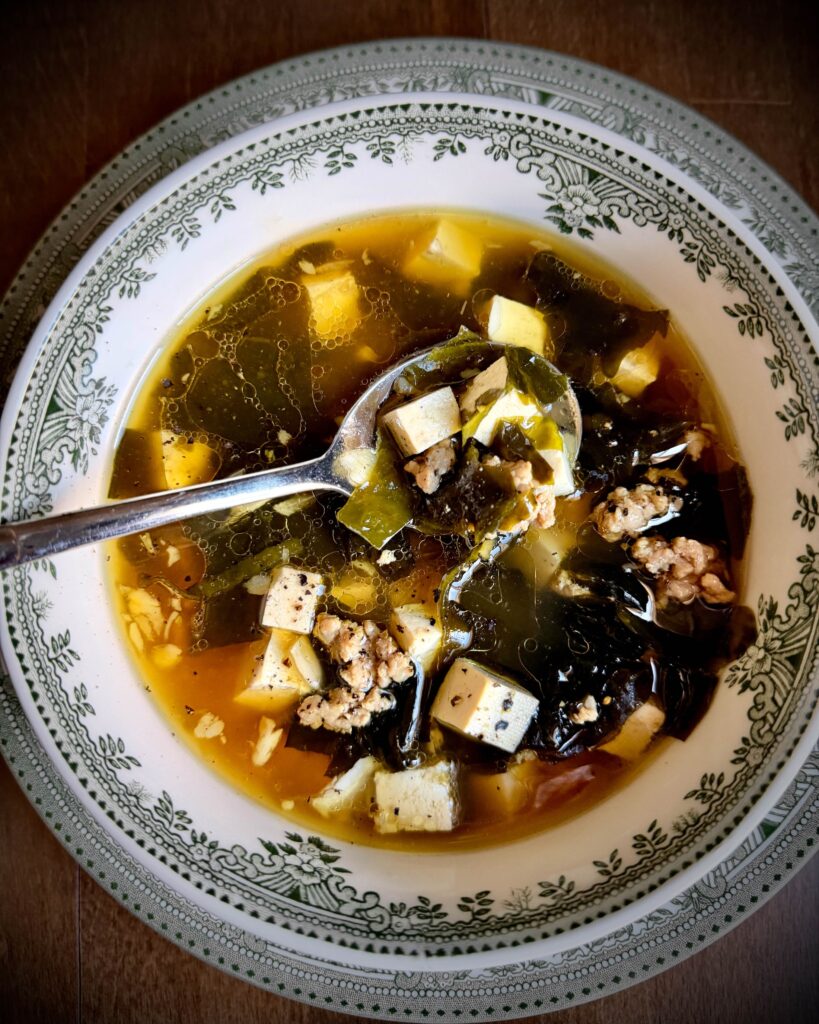
The dried seaweed (miyeok, often sold as wakame) unfurls into silky ribbons as it simmers, lending a gentle ocean note to the soup. Traditional miyeok guk usually relies on water, beef broth, or a Korean anchovy-kelp stock for its base. In this recipe, I add a small spoonful of hondashi — a Japanese-style dashi powder — as a quick way to bring extra umami to the broth.

Cubes of firm tofu are added at the end to heat through, holding their shape while taking on the flavor of the soup. Together, the tender tofu and pleasantly chewy seaweed create a satisfying contrast that gives each spoonful layered texture. Finished with a generous grind of black pepper and a drizzle of toasted sesame oil, the soup is excellent alongside steamed white rice or enjoyed on its own as a warm, savory bowl.

Seaweed Soup Recipe

Continue reading “Seaweed Soup with Pork and Tofu (Miyeok Guk)”

Maine Scallop Crudo

Maine Scallop Crudo

🌊 Maine Scallop Crudo 🌊
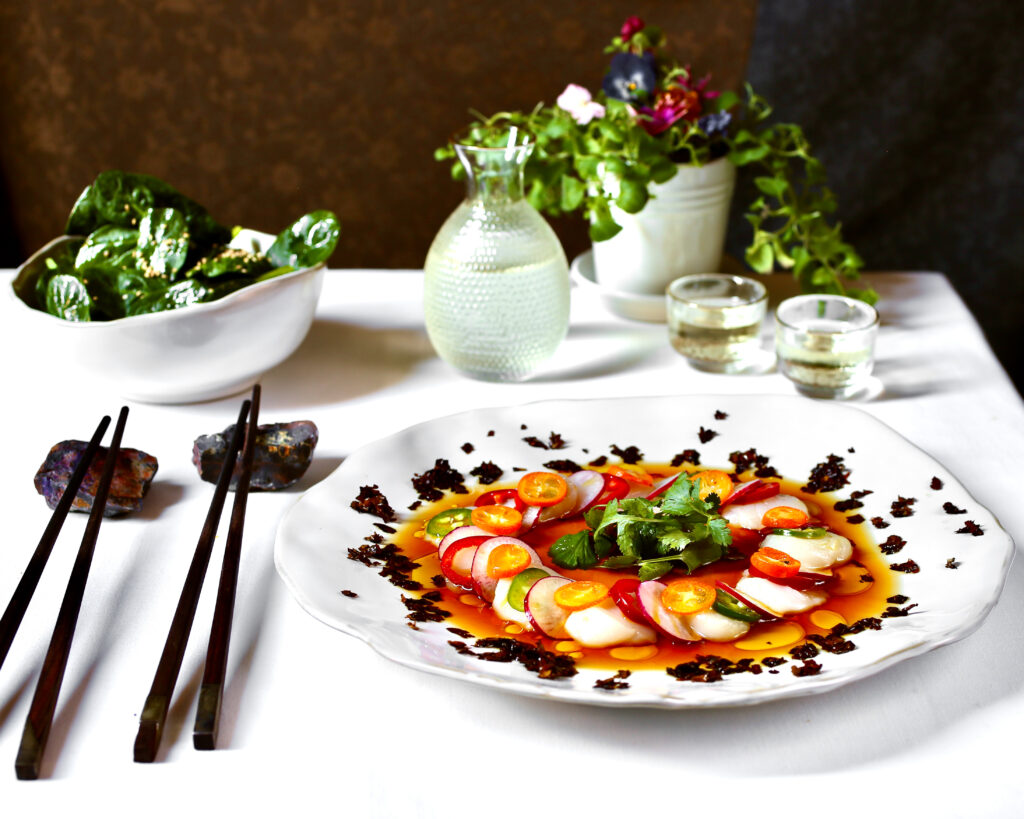
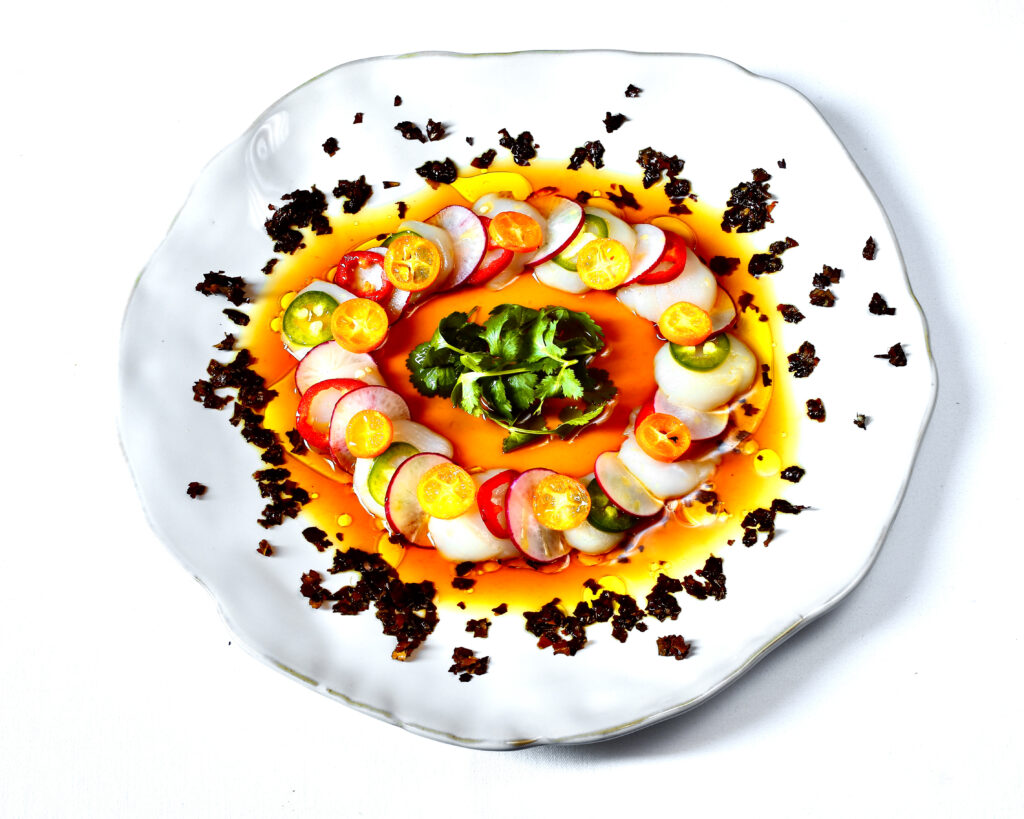
Maine Dulse Seaweed, Kumquat, Radish, Jalapeño, Lemon Ponzu, Cilantro

Maine’s long coastline and clean, cold waters inspired this dish featuring raw, buttery, day-boat Sea Scallops with their slightly sweet flavors; and Dulse (Palmaria palmata) a beautiful red seaweed that has a rich, meaty, umami flavor.

Crunchy peppery radish balance the tender scallop slices, jalapeños add vegetal spiciness, and seasonal kumquats add sweet tart notes. Lemon ponzu provides a base of sweet, sour, and salty flavors, where the olive oil adds a subtle richness.

When they’re raw, dulse flakes taste like briny ocean waters, but when sautéed, the smoky and savory characteristics emerge, giving dulse the nickname “bacon of the sea,” which pairs perfectly with this coastal crudo.

Lastly, a little mound of cilantro leaves brings the bright herbal notes, a sashimi style learned from Chef Nobu.

Maine Scallop Crudo

Maine Scallop Crudo Recipe

Continue reading “Maine Scallop Crudo”

Scallop Sushi ~ Gunkan Maki Style

Scallop Sushi ~ Gunkan Maki Style

Scallop Sushi ~ Gunkan Maki Style

Tender and buttery, day-boat sea scallops from Maine are simply delightful with their slightly sweet flavors, and slightly briny hints of the sea. They are harvested by fishermen that go to work in the icy waters then return to port that same day.

Since the fishing trip is short, day-boat scallops do not need to sit on melting ice like longer expeditions, and therefore do not absorb water over the course of the trip. The taste is pure and natural, as the scallops are not bloated with water after harvest. These scallops are treated with the utmost care, and never soaked in a solution of sodium tripolyphosphate which is commercially used as a preservative but unfortunately degrades the quality of the scallop.

🍣  🍣  🍣

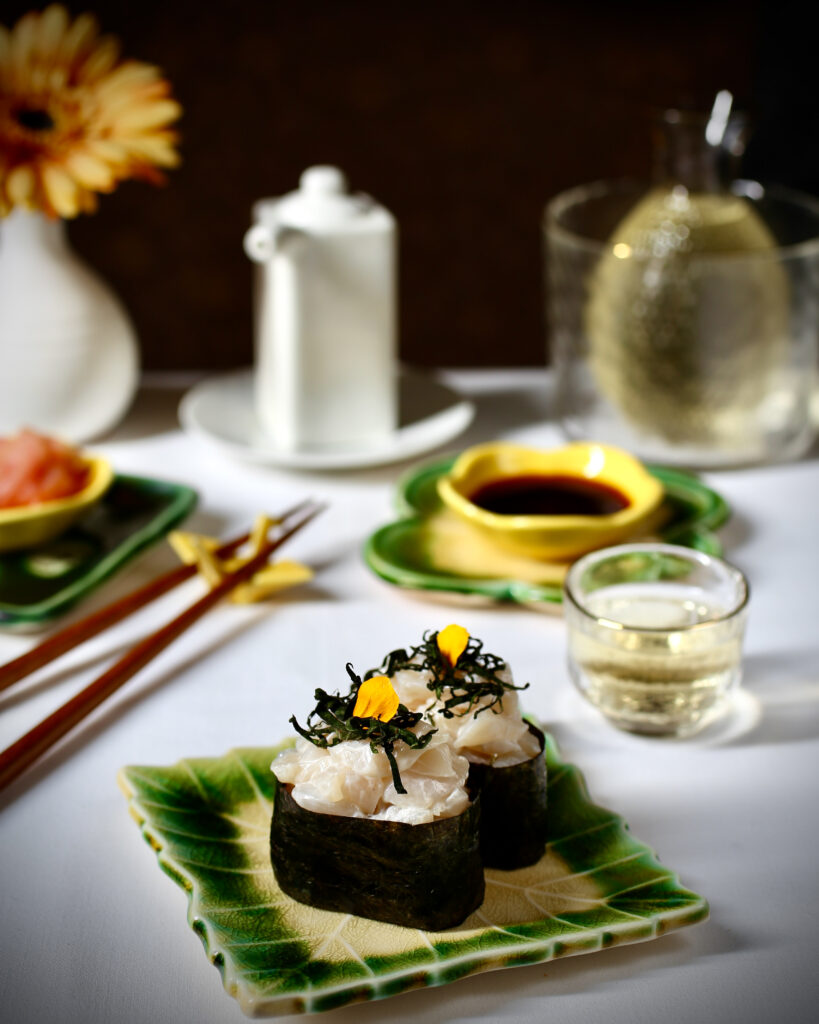
Gunkan maki was invented in 1941 by Hisaji Imada, the chef/owner of restaurant Kyubey in Tokyo. His new-fangled presentation allowed for the sushi service of soft/loose toppings, such as sea urchin and fish roes. These toppings could not be served in the traditional nigiri style, which consists of a solid slice of raw fish atop an oblong rice ball.

The shape of the newly-developed sushi resembled that of a battleship, hence the name. Gunkan is battleship in Japanese, Maki means roll. Sushi rice is hand-formed into a cuboid, rolled/wrapped with nori, then a soft/loose filling is spooned into the interior.

Here our battleship is filled with diced raw day-boat scallop lightly tossed with Japanese mayonnaise and sea salt. Aromatic shiso adds complex herbal notes where a bit of pungent wasabi flavors the seasoned rice. To quote one of my favorite chefs on a famous seafood dish, It was a morsel of perfection.”

Scallop Sushi Recipe

Continue reading “Scallop Sushi ~ Gunkan Maki Style”

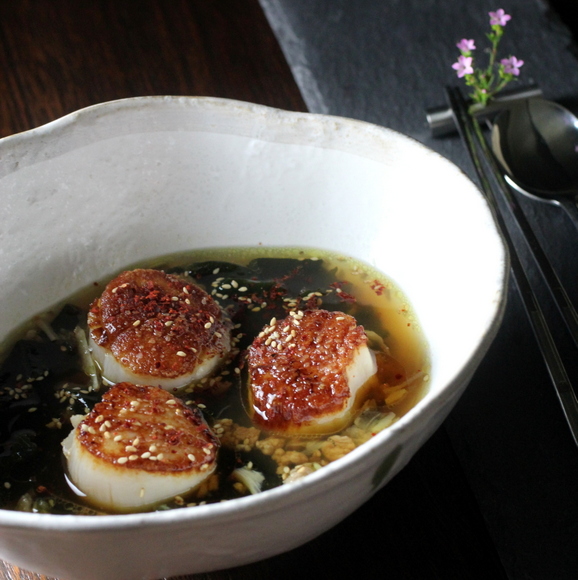
Pan-Seared Jumbo Sea Scallops in a Korean Seaweed Soup

미역국 korean seaweed soup, miyeok guk, miyuk guk
Pan-Seared Jumbo Sea Scallops in a Korean Seaweed Soup

Traditionally this satisfying soup is savored by Korean mothers who have just given birth as a restorative meal, to replenish vitamins and nutrients. Consequently, it is also enjoyed on one’s birthday, as a way to commemorate that special day.  Here, the addition of some gorgeous huge Atlantic Sea Scallops definitely adds to the celebration!

This soup, miyeok guk or miyuk guk, is simple but super-flavorful and the scallops add a luxurious component. It’s made with seaweed known as miyeok in Korean/wakame in Japanese, lots of garlic and ground pork  in an ocean-y broth. It is garnished with a drizzle of toasted sesame oil, a sprinkling of crunchy sesame seeds, while a restrained amount of Korean red chile flakes called gochugaru adds a lively quality. The scallops are seasoned with Kosher salt and seared in a hot pan with just a bit of canola oil to let their natural flavor shine.

Continue reading “Pan-Seared Jumbo Sea Scallops in a Korean Seaweed Soup”